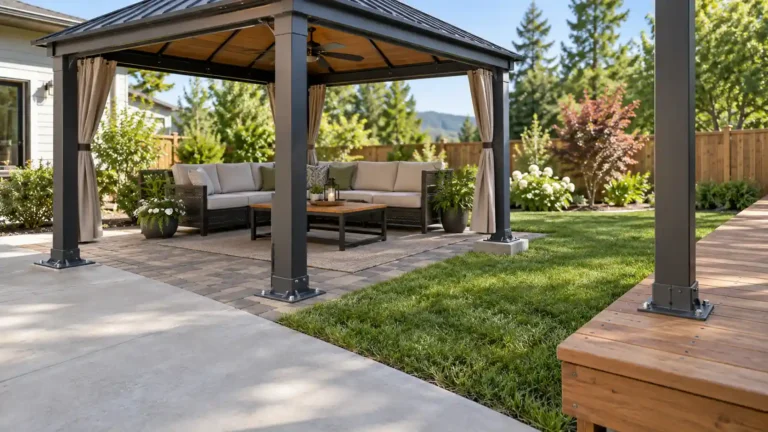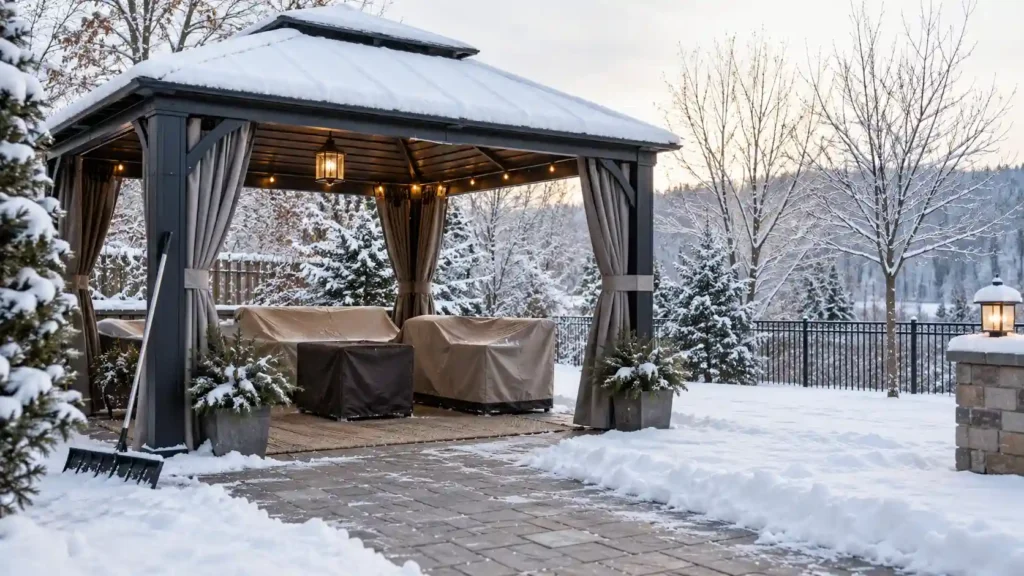
A gazebo can come through winter in good shape, but it needs more than a cover. Snow adds weight to the roof. Ice can block drains. Wind can pull at loose panels, curtains, and weak anchors.
Start with the care guide for your exact model. Then clean the roof, fix damage, check the anchors, and store any fabric that should come down. Set up a snow removal plan before the first storm.
The goal is to leave a sound, well-drained structure that you can check and care for through winter.
Can your gazebo stay up all winter?
Some gazebos can stay outdoors all year. Others need to be taken down before snow or strong winds arrive. The roof material alone does not tell you which type you own.
| Gazebo type | What to check before winter |
|---|---|
| Pop-up gazebo | Check the take-down rules. Do not treat a portable sun shelter as a snow shelter. |
| Fixed frame with a fabric roof | Check whether the canopy must come off and whether the bare frame can stay up. |
| Metal hardtop | Find the model’s snow limits, anchor rules, and snow removal steps. |
| Polycarbonate roof | Check the snow limits and the approved tools for the plastic panels. |
| Wood frame with a solid roof | Check both the frame’s condition and the care rules for its roof covering. |
If you cannot find the manual, look for a model number on a post, label, receipt, or order email. Ask the maker for the correct guide. Do not use a similar-looking gazebo’s rating as a substitute.
Start while the weather is mild
Choose a calm, dry day before snow is in the forecast. Start sooner if you need to stain wood or repair a roof joint. Those products need the right air and surface temperatures, plus time to dry or cure.
There is no single winter deadline for every home. Your local weather and the work you need to do should set the date.
Set aside the manual, gloves, a soft brush, a bucket, and the right hand tools. Take clear photos of the roof and each post base before you begin. They give you a useful record for checks after storms.
1. Check the snow rating and its limits
A snow-load rating describes a load the structure is designed or tested to bear under stated conditions. It may be given in pounds per square foot or kilograms per square metre. It is not a promise that any depth of snow is safe.
Read the notes that go with the rating. Does it apply to an evenly spread load? Does it depend on a certain base and anchor setup? Does the manual still tell you to remove snow as it builds up?
Wet snow can weigh far more than the same depth of loose, dry snow. Ice and rain on an existing snow layer add more weight. Wind can also build a deep drift on just one part of the roof.
Do not use a general rule such as “clear it at six inches.” Follow the instructions for your own gazebo. If the maker gives no clear snow guidance, ask before leaving it exposed to winter storms.
2. Clear the roof and give water a way out
Remove leaves, twigs, and dirt before they freeze in place. Pay close attention to roof edges, gutters, and drain outlets. Some gazebos drain through channels in the frame, so check the route shown in the manual.
Use tools and cleaners approved for the surface. A pressure washer or stiff brush can harm coatings, seals, or roof panels. Our guide on how to clean a gazebo roof without damaging it explains the care needed for each roof type.
Clear leaves from around the feet as well. Check where roof water lands. If it forms a puddle at a post, deal with the blocked outlet or drainage problem before cold weather arrives.
Do not plug drain holes to keep insects or cold air out. Water needs a clear path away from the structure.
Fix leaks before the first freeze
Look for stains, loose roof caps, failed washers, and cracked panels. A small drip is easier to trace during mild weather than beneath a layer of ice.
Find the failed part before you apply sealant. Our guide to fixing a leaking gazebo roof can help you work out where water enters and what needs repair.
Leave enough dry weather for the repair product to cure. A surface that feels dry to the touch may still need more time before rain or frost.
3. Check the frame, joints, and anchors
Walk around the gazebo and look at each post, brace, and joint. Check for missing bolts, bent brackets, deep cracks, and loose connections. Do this while the roof is clear of snow.
Tighten hardware as the manual directs. More force is not always better. It can crush wood, strip threads, or damage roof washers. Some panel fittings also need room for movement as temperatures change.
At each base, check for lifted plates, loose anchors, decay, or cracked concrete. Rust streaks may help you spot metal parts that need a closer look.
The anchor must suit both the gazebo and the surface below it. A screw in a thin deck board is not the same as a designed connection to the deck structure. Nor should you assume that a loose paving slab provides a sound anchor.
If the base moves or the anchor setup is unclear, ask an installer to check it. Adding sandbags is not a general fix for a permanent gazebo with weak anchors.
Read the model’s wind limits too. Check whether its rating depends on a specific installation or on leaving the sides open. Finish this work before strong winds arrive. Do not go outside during gusts to tie down a moving gazebo.
4. Protect exposed wood and metal
Winter prep should address worn finishes, but it should not hide damage beneath a fresh coat.
Wood posts and beams
Check exposed edges, joints, and areas near the ground. Small surface checks can occur as wood dries. Soft wood, deep splits at joints, or movement in a beam need closer assessment.
Renew the finish when the wood’s condition and the product’s care schedule call for it. Our guide on how often to seal or stain a wooden gazebo explains how to judge the timing.
Apply the right product to clean, suitably dry wood. Follow its temperature and cure rules. Do not rush a coat onto damp or frosty timber just to finish before winter.
Steel frames and roof parts
Check scratches, cut edges, joints, and fasteners for rust. Small areas of surface rust may suit an approved touch-up repair. Flaking metal, holes, and badly weakened brackets call for replacement or professional advice.
Follow our steps for removing and preventing rust on a metal gazebo before coating a damaged area.
Aluminum does not form red rust like steel, but its coatings and steel fittings still need care. Use the finish system named for the actual part.
Clear roof panels
Check polycarbonate sheets for cracks and loose retaining strips. Use only compatible cleaners and repair products. Do not scrape the panels or fill every gap with caulk; some channels and clearances are part of the roof design.
5. Store fabric and remove loose items
Take down seasonal curtains, netting, and removable canopies as the maker directs. Wash them under their care instructions and let them dry fully before folding. Store the fabric in a dry place, with labeled bags for hooks and clips.
If your gazebo is a pop-up model, follow its full take-down and storage steps. Removing the canopy does not automatically make every portable frame suitable for winter.
Move cushions, light chairs, hanging baskets, and loose decor into storage. Remove temporary lights when their instructions call for it. Keep water away from electrical connections and use their proper weather covers.
Do not pack furniture tightly against the posts or block the route you need for winter checks.
Should you wrap the gazebo in a tarp?
Use a winter cover only when it is suitable for your exact model and installed as directed. A loose tarp can catch wind, rub the finish, and form pockets that hold water or snow.
Closing the sides also changes how wind acts on the gazebo. Use only enclosures that the manufacturer permits, with the required anchors and vents.
A cover does not increase the roof’s snow rating. It also does not remove the need for winter checks.
6. Plan safe snow removal before you need it
Decide who will check the gazebo after snow, freezing rain, and strong winds. Keep the manual’s snow removal instructions handy. If safe access will be difficult, arrange professional help before storms arrive.
Check nearby hazards too. A gazebo below a taller roof may receive sliding snow from above. Dead or damaged branches can fall onto it. Have those risks assessed before winter; do not try to cut limbs from beneath a loaded branch.
When the manufacturer allows snow removal from the ground:
- Wait until conditions are safe. Keep people and pets out of the work area.
- Check for sagging, shifted posts, and loose panels from a distance.
- Use the soft, non-abrasive tool approved for that roof.
- Keep clear of falling snow, ice, and overhead power lines.
- Remove small amounts in the pattern the manual specifies. Avoid leaving a heavy pile on one section while stripping another bare.
- Stop if the tool catches, the roof moves, or snow will not release with gentle work.
Stay on firm ground and outside the slide path. If the roof cannot be reached safely from there, the job needs a professional.
Never walk on a gazebo roof to clear snow. Do not stand beneath a sagging roof or push its panels upward from below.
Avoid metal shovels and sharp scraping edges. They can cut coatings, dent sheets, and damage plastic. Do not chase the last frozen layer with force.
7. Handle ice without harming the roof
Ice needs a different response from loose snow. Chipping it with a hammer or shovel can break panels, damage seals, or release a sheet of ice toward you.
Do not pour boiling water over the roof. Do not use a torch, open flame, or heater beneath it to melt the ice. Avoid roof salts and chemical deicers unless the roof maker approves the exact product and use.
If ice remains attached but there is no sign of distress, keep the area below clear and get advice on safe removal. If the roof sags, joints separate, or posts shift, stay away and seek urgent professional help.
After a thaw, check drains from a safe position. Keep the meltwater route open without striking frozen gutters or prying at panels.
8. Check the gazebo after each major storm
Start from inside the house or another safe spot. Look for changes in the roofline, fallen limbs, and loose parts before you approach.
Once conditions allow, compare the gazebo with your fall photos. Look for shifted bases, bent roof edges, new gaps, and fresh stains.
Keep people away if you see a sag, a leaning post, a broken brace, or a lifting anchor. Do not enter to fetch furniture or add a makeshift support. Repairs should follow an assessment of the damage.
If you will be away, ask someone to carry out these checks. A gazebo that needs snow cleared cannot be left without a care plan for the whole season.
Your final check before winter
- The correct manual and snow rules are easy to find.
- Roof debris is gone, and drains are clear.
- Leaks and damaged parts have been addressed.
- Joints, post bases, and anchors have been checked.
- Any new stain or repair product has fully cured.
- Seasonal fabric is clean, dry, and stored.
- Loose items and unapproved covers are removed.
- Someone is ready to inspect after storms and arrange snow removal.
Common winter care questions
Should I add a support post under the roof?
Only if the maker approves a support kit for your model. Install it before snow arrives, as directed. A makeshift prop can place force on the wrong part of the roof. Even an approved support does not cancel snow removal rules.
Can I leave the roof on and remove the sides?
Often, but check the manual. A year-round hardtop may stay in place while its seasonal curtains come down. A fabric roof may also need removal. The correct setup depends on the model.
Does a steep roof clear its own snow?
It may shed some snow, but do not rely on that. Ice, wet snow, drifts, and roof fittings can prevent an even slide. Follow the care rules and keep people clear of the roof edges.
Is a covered gazebo safe to use during a winter storm?
Do not treat it as storm shelter. Go indoors during severe weather. Resume use only after conditions are safe and you have checked the structure for damage.