A small rust spot can grow into a weak joint or a leaking roof. Early care is much easier than replacing a post, panel, or bracket later. Yet the wrong brush or paint can damage the finish around the spot.
Start by finding out what the gazebo is made from. Painted steel, powder-coated steel, galvanized steel, and aluminum need different care. Remove only loose rust and failed coating. Then cover the exposed metal with a primer and topcoat approved for that surface.
Do not paint over damp rust. Do not grind thin roof panels. Replace any part that has deep pits, holes, cracks, or lost strength.
Quick answer
Wash the rusted area with mild soap and water. Rinse it and let it dry. Remove loose paint and surface rust with a small wire brush or sandpaper suited to the metal.
Wipe away all dust. Apply the right metal primer, followed by a matching outdoor topcoat. Use thin coats and follow the label for temperature, drying time, and recoating.
Check the gazebo again after the paint cures. Correct the cause as well. Common causes include chipped paint, trapped water, leaking gutters, mixed-metal fasteners, salt, and sprinklers that wet the frame each day.
First, identify the metal and finish
Look at the gazebo manual, order page, label, or parts list. Do not rely on color alone. Black frames may be powder-coated steel, painted steel, aluminum, or a mix of materials.
| Material or finish | How it may look | What the damage may mean |
|---|---|---|
| Painted steel. | Smooth colored paint over dark gray metal. | Red rust often means the paint has chipped and exposed steel. |
| Powder-coated steel. | Thick, even color with a hard finish. | Rust may begin at a scratch, cut edge, weld, or fastener. |
| Galvanized steel. | Silver, gray, or spangled zinc surface. It may also have paint or powder coat. | Red rust means the zinc protection has failed or worn away at that spot. |
| Aluminum. | Light metal that may be bare, painted, or powder-coated. | Aluminum can corrode, pit, and form a pale oxide, but it does not make red iron rust. |
| Wrought iron or mild-steel trim. | Heavy bars, scrolls, rails, or cast-looking parts. | Chipped paint can lead to red rust and scaling. |
| Steel fasteners. | Screws, bolts, washers, and brackets. | A rusty fastener can stain a sound panel below it. |
The Aluminum Association notes that aluminum will not rust like steel. If an aluminum part has orange streaks, inspect nearby screws, brackets, tools, or runoff. The stain may have come from steel.
The American Galvanizers Association also separates rust staining from red rust on galvanized steel. A surface stain can sit on sound zinc. Red rust shows that the steel below the zinc is corroding.
Is the rust safe to repair?
Many small surface spots are suitable for careful do-it-yourself work. Structural rust is not.
A small repair may be reasonable when:
- The rust sits on the surface.
- The metal still feels firm.
- No hole or crack is present.
- The part has kept its shape.
- The gazebo remains square and stable.
- The spot is easy to reach from the ground.
- The maker permits touch-up work.
Replace the part or call a professional when:
- Rust has formed a hole.
- The metal flakes off in thick layers.
- A post, beam, roof rib, or anchor plate has deep pits.
- A welded joint is cracked or swollen with rust.
- A bolt hole has grown larger.
- The roof panel feels thin or bends around the spot.
- A post base moves when pushed.
- Several connected parts are rusting.
- The gazebo has shifted, leaned, or started to sag.
Backyard Discovery advises owners to replace severely corroded gazebo parts. Paint can slow surface corrosion. It cannot restore metal that has lost strength.
Supplies for a small rust repair
Your product manual should guide the final list. Most small jobs may need:
- Mild soap and clean water.
- Soft cloths or a sponge.
- A small hand brush suited to the metal.
- Fine or medium sandpaper listed by the coating maker.
- A plastic drop cloth.
- Painter’s tape and masking paper.
- Clean lint-free cloths.
- Metal primer approved for the base metal.
- Outdoor topcoat that works with the primer.
- Small artist brush or narrow paint brush.
- Gloves and safety glasses.
- A dust mask or other protection required by the product label.
Brush-on paint gives better control around roof fabric, wood, furniture, and plants. Spray paint can drift far from the repair. Use it only outdoors in calm air and follow every label warning.
Never paint near an open flame, lit grill, heater, cigarette, or hot surface. Move portable grills away before work. Let the coating cure fully before the gazebo is used for cooking.
Choose the right weather
Pick a dry, calm day. The metal should be cool and dry. Strong sun can heat a dark frame far above the air temperature.
Read the primer and paint labels. Many coatings set limits for air temperature, surface temperature, and humidity. Rust-Oleum technical sheets, for example, give specific painting conditions and tell users to prepare a clean, dry surface. Your chosen product may have different limits.
Check the forecast for the full drying and curing period. Dew can form even when rain is not expected. Do not begin if the fresh coating may get wet too soon.
How to remove rust from a metal gazebo
1. Check the whole gazebo
Walk around the frame and roof. Look at joints, welds, screws, brackets, post bases, roof edges, and gutter points. Use a phone camera to view high areas from the ground.
Rust often starts where water sits. Pay close attention to flat ledges, closed joints, and places where metal touches damp wood or soil.
Take photos before you start. Mark each spot with a small piece of painter’s tape nearby. Photos help you check whether the rust returns.
2. Fix the source of moisture
Clear blocked gutters and drain holes. Redirect sprinklers. Trim plants that hold wet leaves against the frame. Stop a roof leak before painting the stain below it.
Check the post bases. Soil, mulch, and wet leaves should not sit against metal. Follow the gazebo manual for base clearance and anchoring.
Look at each rusty screw. A mismatched fastener can cause corrosion or leave stains. Replace it only with the size, metal, washer, and coating stated in the parts list.
3. Wash the area
Mix mild soap with water. Wash away dirt, salt, pollen, oil, and bird waste. Use a soft cloth or sponge.
Rinse with clean water. Do not use a pressure washer near seams, seals, roof laps, or thin panels. Let the metal dry all the way.
Paint will not bond well to salt, grease, or dust. Rust-Oleum product sheets direct users to remove dirt, grease, oil, salt, and other surface dirt before coating. They also call for a full rinse and dry surface.
4. Protect nearby surfaces
Move cushions and furniture. Cover wood posts, fabric curtains, clear panels, plants, and paving. Mask a neat area around the spot.
Protect the ground from paint chips and sanding dust. Keep children and pets away until cleanup is complete.
5. Remove loose rust and failed paint
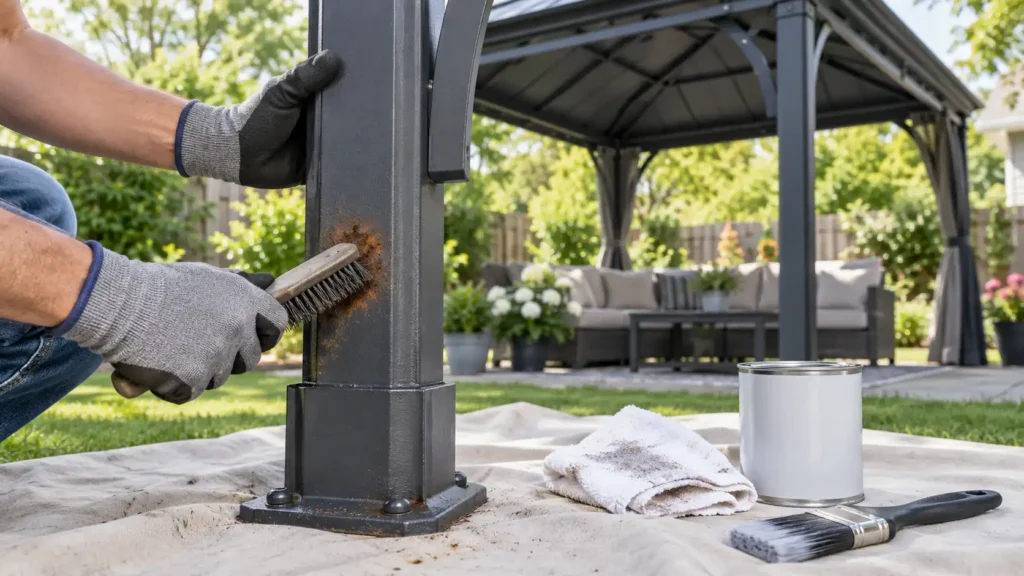
Work on the smallest area needed. For steel, use a small wire brush or sandpaper approved by the paint maker. Brush until loose scale and peeling paint are gone.
You do not need to grind away sound metal. Stop when the remaining edge is firm and the surface feels stable. Deep grinding can thin a roof panel or mark a shaped post.
Backyard Discovery recommends a wire brush for surface rust on metal gazebo parts, followed by touch-up paint or an outdoor rust product. Product instructions still matter because the frame may have zinc or powder coat below the color layer.
Do not use a steel wire brush or steel wool on aluminum. Steel bits can become lodged in the softer surface and later form orange stains. Use an aluminum-safe pad or brush named by the coating maker.
6. Feather the paint edge
Smooth the hard edge between sound paint and the bare repair spot. Use light hand pressure. The goal is a gradual edge that the new primer can cover.
Do not sand far into sound powder coat. A larger bare patch gives rust more room to start if the new paint fails.
Stop if the old coating lifts in sheets. Broad peeling may point to poor bond, trapped corrosion, or a failed factory finish. Ask the gazebo maker whether the part should be replaced.
7. Remove all dust
Use a clean cloth or a vacuum with a suitable filter. Follow the coating label if it calls for a special surface cleaner. Let any cleaner dry.
Do not touch bare metal with oily hands. Oil can weaken the bond. Apply primer soon after prep so damp air does not start new rust.
8. Apply the correct primer
Match the primer to the metal. A primer for plain steel may not bond to galvanized steel or aluminum. Some common outdoor enamels state that they should not be used on galvanized steel.
Ask the gazebo maker for a touch-up kit or paint code first. If none is offered, read the primer’s list of approved surfaces. Look for clear wording that names painted steel, bare steel, galvanized steel, or aluminum as needed.
Apply a thin, even coat. Keep the primer within the prepared area. Follow the label for the number of coats and recoat window.
9. Add the topcoat
Use a topcoat that works with the primer. Match the original color and sheen as closely as you can. Test it in a hidden spot when appearance matters.
Several thin coats usually look smoother than one thick coat. Thick paint can run, stay soft, and bridge over dirt. Follow the label instead of guessing at coat thickness.
Cover the primer and the feathered edge. Do not paint moving joints, drain holes, bolt threads, labels, fabric, seals, or areas the manual says to keep bare.
10. Let the repair cure
Drying and curing are not the same. Paint may feel dry while it remains soft below. Keep water, covers, furniture, and hands away for the full time on the label.
Remove masking tape as directed by the paint maker. Some tape should come off while the final coat is still soft. Other products need more time.
Inspect the spot after the first rain. Look for bubbles, lifting paint, red streaks, and trapped water.
How to repair rust on powder-coated steel
Powder coat acts as a hard barrier. Once it chips, water may reach the steel and travel under the edge. A tiny orange mark may hide a wider loose area.
Tap and scrape only with light hand pressure. Remove coating that has already lost its bond. Keep sound powder coat in place.
Ask the gazebo maker for the correct touch-up product. Color alone is not enough. The repair also needs to bond to the exposed steel and old powder coat.
Prime bare steel if the touch-up system calls for primer. Seal the feathered edge with the topcoat. Watch the repair over the next wet season.
Broad bubbling or peeling needs expert review. Spot paint cannot fix poor bond across a whole beam or roof panel.
How to repair galvanized steel
Galvanized steel has a zinc coating that shields the steel below. The American Galvanizers Association explains that zinc gives barrier and cathodic protection. Touching up bare areas helps the part last longer.
Do not treat a dull gray finish as rust. Galvanized steel often changes from bright silver to dull gray as it weathers. Color alone does not show that the coating has failed.
Red rust needs attention. Clean the area and use a repair system suited to galvanized steel. ASTM A780 recognizes zinc-rich paint, zinc solder, and sprayed zinc as repair methods for hot-dip galvanized coatings. Most gazebo owners should not attempt hot solder or metal spray work.
A maker-approved zinc-rich coating may suit a small prepared spot. Follow its surface prep and film instructions. Large damaged areas belong with a metal-coating professional.
Do not grab any can marked “rust paint.” Several paint products clearly exclude galvanized steel. Check the technical data sheet before use.
What to do with rust on a metal roof
Treat roof rust with more caution than rust on a low rail. Thin panels are easy to bend or grind through. Roof work also brings a fall risk.
Inspect from the ground. Look for rust around screws, roof edges, overlaps, scratches, and gutters. A rust trail below a screw may come from the fastener rather than the panel.
Do not walk on the roof. Do not place a ladder against a thin panel or gutter. Hire a roofer or gazebo installer when the spot cannot be reached from a safe work platform.
Replace a panel that has holes, deep pits, a weak fastener area, or rust along a main overlap. Surface paint cannot restore a water-tight joint after the metal has failed.
Check the leaking-gazebo-roof guide when water is also present. The leak source may need a new washer, fastener, gasket, cap, or panel before any paint work.
What to do with rusty screws and brackets
Do not paint a badly rusted fastener in place. Remove and replace it if the manual allows. Support the structure first when the part carries a load.
Use the listed part number when possible. A screw that looks similar may have the wrong strength, thread, coating, washer, or metal.
Mixed metals can speed corrosion in wet conditions. The American Galvanizers Association explains that direct contact between unlike metals, moisture, and an electrical path can form a corrosion cell. One metal then corrodes faster.
Do not swap galvanized hardware for copper or bare steel based on appearance. Use maker-approved fasteners and any listed plastic washer, rubber gasket, or isolating part.
Call an installer for rust at anchors, post shoes, roof supports, or welded brackets. The gazebo must be stable while parts are changed.
How to prevent rust from returning
Check the finish after storms
Look for new chips, scratches, dents, and loose screws. Early touch-up keeps a small mark from reaching bare steel. Check after hail, fallen branches, and furniture moves.
Keep the gazebo clean
Wash dirt and bird waste with mild soap and water. Rinse well. Dirt can hold moisture against the finish.
Coastal salt needs faster removal. Rinse the frame with fresh water when salt spray or road salt reaches it. Follow the maker’s care schedule.
Keep water moving
Clear gutters, drain holes, and roof valleys. Correct a sagging canopy or panel. Do not let wet leaves sit on rails or roof edges.
The American Galvanizers Association notes that flat areas and crevices can collect water and face faster corrosion. Drainage lowers the time that moisture stays on the metal.
Redirect sprinklers
Daily spray keeps joints wet and may leave mineral or fertilizer deposits. Turn the nozzle away from posts, walls, and roof edges.
Keep soil and mulch away
Do not pile soil, bark, or wet leaves against a post base. Such material holds water. Keep the base visible so you can inspect it.
Protect scratches at once
Keep the model’s touch-up paint in a safe storage place. Clean and repair a new chip before red rust grows. Follow shelf-life and storage directions.
Use the correct fasteners
Match the original metal and coating. Keep insulating washers or gaskets in place. Check that roof washers are not cracked or crushed.
Avoid trapping moisture under a cover
A cover can protect a seasonal gazebo, but only when the maker allows it. The frame should be clean and dry first. Leave the airflow stated in the cover guide.
Plastic wrapped tightly around damp steel can hold water against the finish. Wind-driven covers may also rub through paint at corners.
Control grill heat and grease
Follow the grill and gazebo clearance rules. Grease holds dirt and can damage some finishes. Heat may also harm ordinary paint.
Use only a heat-rated coating where the product maker and gazebo maker allow it. Never paint a hot surface or a part exposed to direct flame.
Common mistakes that make rust worse
Painting over active rust
Loose scale remains weak below the paint. New coating may soon bubble or peel.
Using one primer on every metal
Plain steel, zinc-coated steel, and aluminum may need different primers. Check the approved-surface list.
Grinding a thin panel
Power tools can remove sound metal fast. A weak roof or wall panel may need replacement instead.
Leaving sanding dust in joints
Metal dust can stain nearby surfaces and hold moisture. Clean the work zone before priming.
Spraying in wind
Overspray can land on cushions, wood, plants, glass, cars, and neighboring property. A small brush repair is easier to control.
Blocking drains with paint
Paint and sealant should not cover weep holes or water paths. Trapped water can start new corrosion.
Using the wrong replacement screw
The wrong metal can create a corrosion pair. The wrong thread or size can also weaken the joint.
Ignoring rust below the surface
A tiny stain near a weld or post base may be the first sign of deeper damage. Check both sides when you can do so safely.
Safety rules before sanding or painting
Wear eye protection and gloves. Read every cleaner, primer, and paint label. Follow the listed need for skin, eye, and breathing protection.
Work outdoors with strong airflow. Keep spray mist away from people, pets, food, grills, flames, and air intakes. Stop if the wind changes.
Do not sand an old or unknown coating until you know what it contains. CDC says sanding or removing lead paint can make lead dust. EPA recommends testing when lead-based paint may be present and using lead-safe work methods.
Keep children and pregnant people away from any area where old paint is disturbed. Collect chips and dust on plastic. Follow local rules for disposal.
Stay on the ground when possible. Use a stable work platform for an easy-to-reach area. Call a professional for high roof parts, weak metal, or work near power lines.
How often should you inspect for rust?
Check the gazebo at least in spring and fall. Add a quick check after severe weather. Coastal yards, pool areas, and sites near salted roads may need more frequent care.
Look at the same trouble points each time:
- Post bases.
- Screws and washers.
- Welds and brackets.
- Roof edges and overlaps.
- Gutters and drain holes.
- Spots touched by plants.
- Areas hit by sprinklers.
- Chips caused by furniture or tools.
Take dated photos of repaired areas. A returning orange mark shows that moisture still reaches the metal or the coating has failed.
Frequently asked questions
Can you paint directly over rust on a gazebo?
Only if the chosen coating is made for the exact rust condition and metal. Loose scale, dirt, grease, and failed paint still need removal. A clean, dry, firm surface gives the repair its best chance to last.
Does white vinegar remove rust from a metal gazebo?
Acid can remove some rust, but it can also mark zinc, aluminum, paint, and powder coat. Do not use vinegar unless the gazebo or coating maker approves it. A small mechanical clean and matched coating is often easier to control.
Can I use WD-40 to stop gazebo rust?
An oily water-displacing product is not a lasting outdoor coating for most gazebo parts. Oil can also stop primer from bonding. Use the touch-up system named by the gazebo maker.
Should I sand all the old paint off?
No. Keep paint or powder coat that still has a firm bond. Remove only loose rust and failed coating around the spot. Broad stripping creates more bare metal and more dust.
What is the best paint for a rusty gazebo?
The best choice matches the base metal, old finish, primer, weather, and use. Ask the gazebo maker for a paint code or touch-up kit. Check the product sheet for plain steel, galvanized steel, or aluminum before buying.
Can aluminum gazebo parts rust?
Aluminum does not form red iron rust. It can oxidize, pit, stain, and suffer corrosion. Orange streaks on aluminum may come from a steel screw or nearby item.
Why did rust return through new paint?
Moisture may still reach the metal. Loose rust, salt, grease, old weak paint, poor drying, a missed primer, or the wrong coating can also cause failure. Remove the failed patch and correct the cause before repainting.
Can I repair rust on a gazebo roof myself?
A small roof-edge spot may be reachable from a safe platform. Do not stand on the roof. Hire a professional for high areas, holes, deep pits, loose panels, or rust near major roof joints.
When should a rusty part be replaced?
Replace it when rust has made a hole, changed its shape, weakened a joint, enlarged a bolt hole, or caused deep flaking. Replace structural parts under the gazebo maker’s instructions.
Final advice
Rust repair is more than hiding an orange mark. You need to remove weak material, protect the exposed metal, and stop the source of moisture.
Identify the metal first. Use the right primer and topcoat. Keep drains clear and repair chips early. Replace any part that has lost strength, and leave high or structural work to a qualified installer.