What Are Gazebos? Types, Designs, Anchoring & Permits

A gazebo can look perfect in the showroom and still become a headache in your backyard. Many homeowners focus on the design, size and price. But only to discover later that the real challenges begin after the purchase. 

They’re dealing with uneven patios, HOA restrictions and difficult assembly instructions suddenly. And that’s even before considering permits, anchoring requirements, weather resistance and installation costs. However, the truth is that choosing a gazebo is more than just picking a style you like. Because every gazebo type comes with different costs, maintenance needs and requirements.

But this guide of GazeboInsider will cover everything you need to know about Gazebos. We will talk about the gazebo types, permits, anchoring and building considerations. Plus, we will also answer the questions homeowners usually ask before and after installation. 

We have scraped real questions from forums to provide you with practical answers instead of opinions. GazeboInsider covers everything after calling or meeting with experts and observing the real gazebo structures. So you can avoid costly mistakes and make a more informed decision.

What Is a Gazebo?

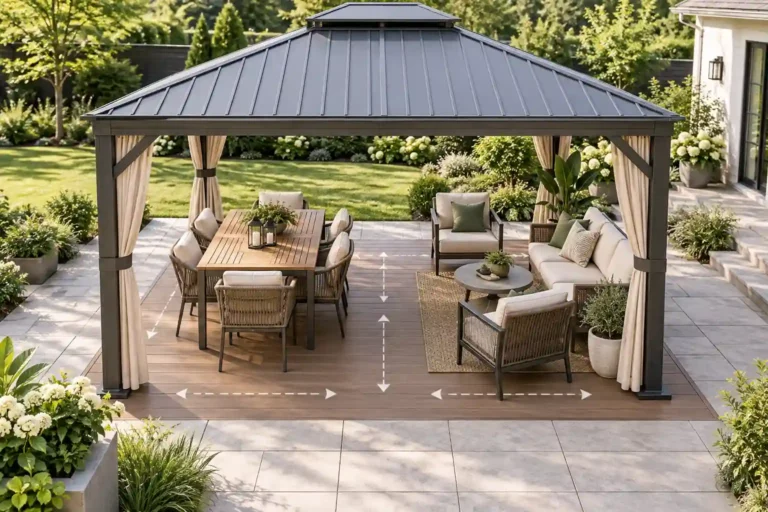
A gazebo is a freestanding outdoor structure with a solid roof supported by posts. The word gazebo originated from the word “gaze” and the Latin suffix “-ebo” meaning “I shall gaze” in the 18th century. Early gazebos were built in gardens and large estates as places to relax while enjoying scenic views. 

However, they evolved from decorative structures into the backyard outdoor living spaces we know today over time. It gives you an area to relax, dine or spend time with family. A gazebo also adds visual appeal to a backyard but its main purpose is to make spaces more usable and comfortable.

What’s Difference Between Gazebos, Pergolas & Canopies?

Although gazebo, pergola and canopies provide shade but they differ in structure.

What’s Difference Between Gazebos, Pergolas & Canopies

Here are key differences to help you make an informed decision:

Feature Gazebo Pergola Canopy
Basic Structure Freestanding outdoor shelter with a roof and open sides Open framework supported by posts Lightweight portable shelter with a fabric top
Roof Type Solid roof made from metal,  polycarbonate,  shingles or similar materials Open slatted or louvered roof + may be upgraded with covers Fabric or soft-top roof
Sides / Walls Open sides + curtains, screens or mesh panels can be added Fully open by design Usually open + some models include removable sidewalls
Shape Options Octagonal, hexagonal, rectangular, square or oval rectangular or square rectangular or square
Foundation Required Usually yes  Often yes No; secured with stakes, weights or anchors
Rain Protection Excellent Limited unless additional roofing is installed Good + fabric blocks light rain but may sag  
Sun Protection Full shade Partial shade  Full shade
Wind Resistance High when properly anchored High when installed with footings Low; requires constant anchoring or weights
Year-Round Use Yes + designed for permanent use Possible with roof and weather upgrades Generally seasonal or temporary
Typical Cost Range $300–$1,800 for kits + $2,700–$10,000 $500–$1,500 for DIY kits + $1,000–$6,400 $50–$600 + commercial models up to $1,500
DIY Friendly Kit models are DIY-friendly Most kits are designed for DIY installation Very easy to set up

Types of Gazebos Based on Structure

Gazebos come in many styles, materials and designs. Some are built for year-round use while others are for temporary shade during outdoor events. We will discuss the eight types of gazebos on the basis of their structure:

1. Hardtop Gazebos

Hardtop gazebos feature a solid roof made from materials such as aluminum, steel or wood. They provide reliable protection from sun and rain and generally last longer than fabric roof alternatives. These gazebos are best for those who want a permanent outdoor living space. However, they are usually more expensive and require proper anchoring due to their weight.

2. Soft Top Gazebos

Soft top gazebos use a fabric canopy instead of a solid roof. They are lighter, more affordable and easier to install than hardtop models. But the fabric may fade or wear over time. They are best for mild climates and seasonal use rather than year round exposure.

3. Pop Up Gazebos

Pop up gazebos are temporary structures for quick setup and portability. You can assemble them in just a few minutes. So that’s why they are used for outdoor events, camping trips, markets and backyard gatherings. Although they are convenient, they cannot handle heavy winds or snow. 

4. Wooden Gazebos

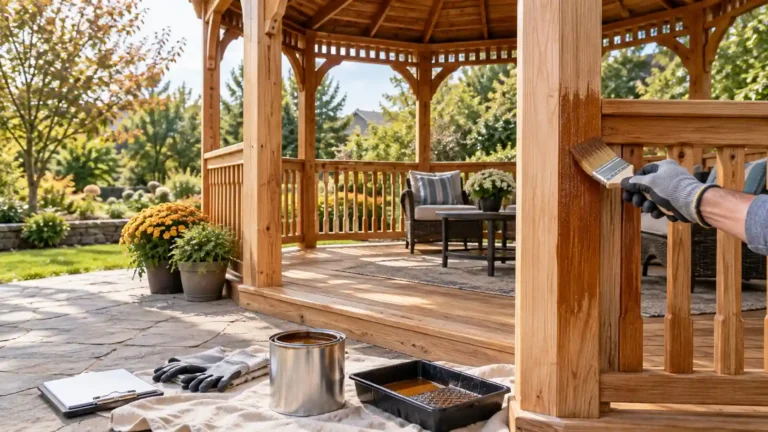
Wooden gazebos give a natural look and blend well with gardens and yards. They can be made of cedar, redwood and pressure treated lumber. Many homeowners choose wood for its classic look and customization options. But its only tradeoff is maintenance. This is because wood requires staining, sealing, or painting to protect it from moisture and weather damage.

5. Metal Gazebos

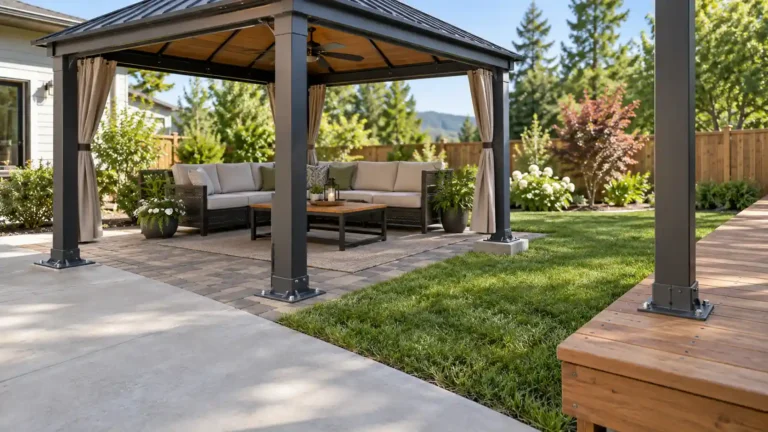
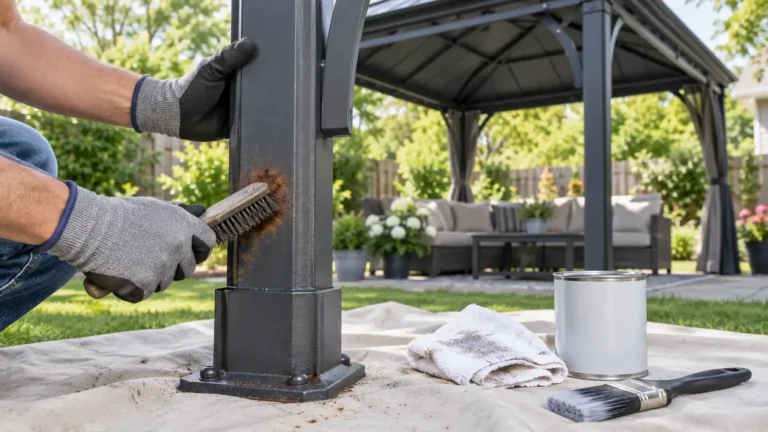
Metal gazebos are generally made up of aluminum or steel. They are durable, resistant to pests and generally require less maintenance than wood. Aluminum models are lightweight and rust resistant whereas steel is durable. Metal gazebos are commonly installed on patios, decks, poolside areas and backyards.

6. Attached Gazebos

An attached gazebo is linked directly to your house, garage, or another existing structure. It makes it convenient for you to step into a covered area without crossing the yard. But it may have complex permitting, flashing and structural requirements.

7. Standalone Gazebos

Standalone gazebos are independent structures placed anywhere on a property. They can be installed near a pool, garden, patio or other outdoor feature. Their biggest advantage is flexibility because they are not connected to a building. This makes standalone gazebos one of the most popular options for residential backyards.

8. Screen & Mesh Gazebos

Screen and mesh gazebos are for those who want to enjoy their outdoor space without dealing with mosquitoes and other insects. The trend of fine no-see-um mesh is getting popular in 2026. It blocks not only mosquitoes but also tiny biting insects that can pass through standard screens. Many newer models also include zippered mesh walls, privacy curtains and double-roof designs.

Gazebo Design Based on Styles  

There are multiple designs of gazebos on the basis of their shape and styles. But we will discuss the architectural styles that got famous in 2026:

Traditional Gazebos

Traditional gazebos have the classic designs. They generally have symmetrical shapes, decorative railings and a pitched roof. These gazebos work well in gardens, parks and backyards where a timeless appearance is preferred.

Victorian Gazebos

Victorian gazebos are known for their ornate details and decorative work. They typically include intricate trim, latticework and carved posts. You can go for Victorian gazebos if you want a historically inspired backyard.

Modern Gazebos

Modern gazebos are more about clean lines, simple shapes and minimalist aesthetics. They are commonly built with materials such as aluminum, steel and glass. Modern gazebos may look beautiful but they are also expensive.

Rustic Gazebos

Rustic gazebos give vintage vibes and blend naturally with the surrounding environment. They often feature exposed wood, natural textures and earthy colors for a warm look. These gazebos are commonly found in woodland settings, cabins, farms and country style properties.

A-Frame Gazebos

A-frame gazebos have a steeply sloped roof that forms an A shape. This design helps rain, snow and debris slide off the roof more easily. Apart from this, these A-frame gazebos also give an architectural look that combines rustic and modern elements.

What are the Gazebo Trends & Innovation in 2026?

Solar integrated gazebos are trending all over the internet in 2026. For example, the new Jackery Solar Gazebo launched at CES 2026 has a louvered roof with integrated solar panels. So it’s actually capable of generating up to 2,000 watts of power. Some models are even designed to support lighting, entertainment systems and home backup power solutions.

Apart from this, a motorized louvered roof is also getting attention. You can open or close the roof with a push button. Even portable gazebos are improving. 

What are the Ways to Build Gazebo?

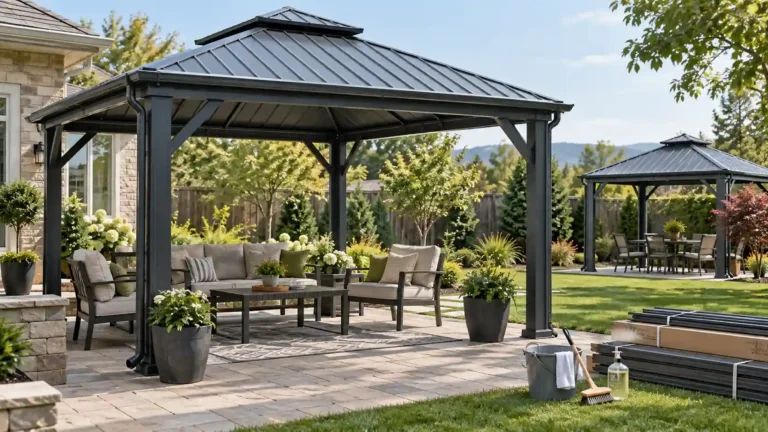
There are different ways to construct a gazebo. Some arrive ready for installation while others require assembly or are custom built from the ground up. The right option depends on your budget, goals, customization and time. Ready made gazebos are pre-manufactured structures. They are usually available in various sizes, materials and designs. Many metal, hardtop and pop-up gazebos fall into this category. So you just have to assemble and anchor them after purchasing. 

DIY gazebo kits contain pre-cut and packaged materials with the necessary hardware and instructions. So they are more flexible than ready made models. However, larger kits can still require several days of work and careful assembly.

Apart from this, you can also customize your gazebo at home. Homeowners can choose the exact size, shape, material, roof style and layout to match their property. Although it’s a flexible but also more expensive option than others.

Can You Safely Put a Wood Burning Fire Pit Inside or Under a Gazebo?

No, you should generally avoid placing the fire pit under the gazebo. Smoke can collect under the roof so it may damage roofing materials or create a fire hazard. This is especially important for wooden gazebos or models with fabric and polycarbonate roofs.

However, if you want a fire pit near your gazebo then consider safer alternatives. You can go for propane fire tables or gas fire pits because they produce less smoke. Another popular option is to place a wood burning fire pit, chiminea or fireplace outside the gazebo. So you can enjoy both the shelter of the gazebo and the warmth of a fire. But always follow the manufacturer’s recommendations and local fire safety regulations before installing any heat source.

Which Surfaces Are Suitable for Installing Gazebo? 

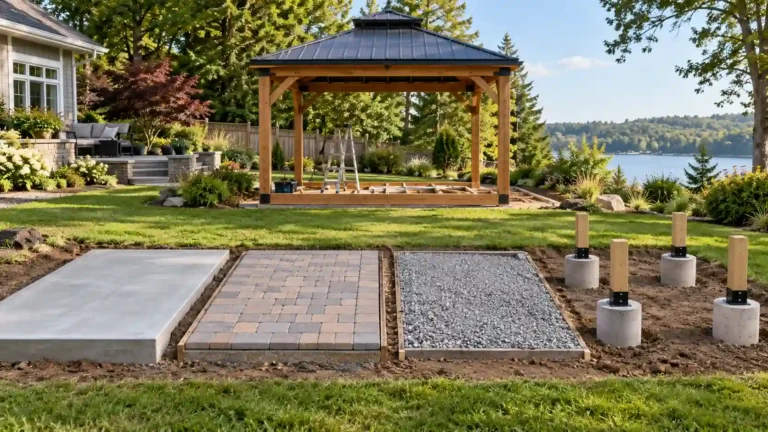
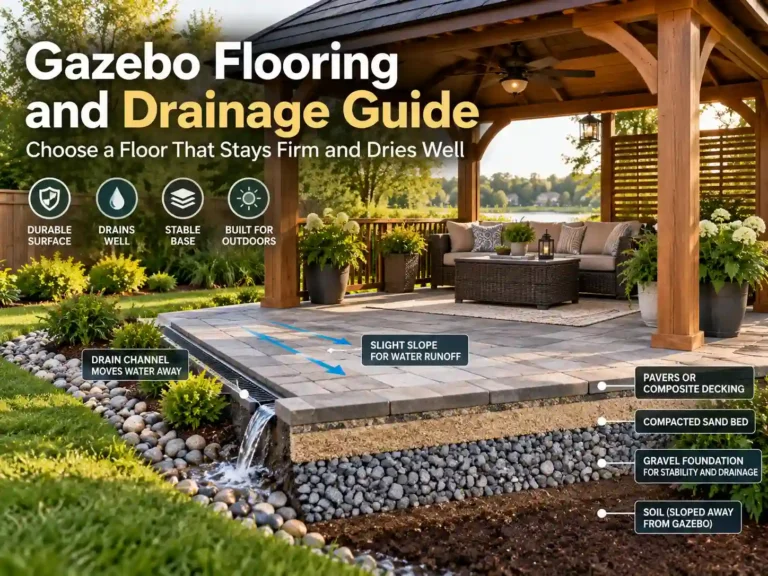
A gazebo can be installed on several types of surfaces but not every surface is suitable for every gazebo. The best option depends on the size, weight and use of the structure. Concrete slabs are a great option because they are more stable and also secure anchoring. Many permanent hardtop and metal gazebos are installed on concrete patios for this reason.

Wooden decks are another popular choice. It is suitable if you want a gazebo linked to an outdoor living area.. However, the deck must be strong enough to support the additional weight of the structure and any furniture placed inside it.

Apart from this, Paver patios can also support a gazebo. But make sure the structure is anchored to concrete footings beneath the pavers. You can also build your gazebo on level grass or compacted gravel for temporary purposes. But let’s not forget that you may have to anchor it using other materials.

Do Gazebos Need to Be Anchored?

Yes, most gazebos require anchoring regardless of their size or material. Even heavy hardtop gazebos can shift, tip or suffer damage during strong winds. So anchoring keeps them stable and reduces the risk of movement over time.

How to Anchor a Gazebo to Concrete or Pavers?

Concrete and paver patios are among the most common surfaces for gazebo installation. You can secure the gazebo on a concrete slab using expansion anchors, wedge anchors or concrete screws. These fasteners pass through the gazebo’s base plates and hold it in place. 

But pavers require a little more planning. The pavers themselves don’t hold the structure in place because they rest on a sand or gravel base. They can shift under pressure or be pulled upward during severe weather. So that’s why you should anchor the gazebo with concrete footings beneath pavers. This provides a stable foundation for pavers and secures your gazebo too. 

Can You Anchor a Gazebo Without Drilling?

Yes, you can anchor a gazebo without drilling but it also depends on local weather conditions. The weight bags, concrete filled planters, sandbags or ground stakes are best for temporary gazebos. However, these methods are generally best for lightweight structures. Permanent hardtop gazebos are much heavier so they require anchors.  

Is It Possible to Move an Assembled Gazebo Without Tearing It Down?

Yes, but it depends on the gazebo’s size and construction. You can easily move the smaller gazebos after removing anchors or bracing. But you have to fully or partially disassemble the larger or permanently installed gazebos to avoid damaging the frame during relocation. Make sure to check the frame for any signs or wear before relocating the gazebo.

Do You Need a Permit for a Gazebo?

It depends on your gazebo’s size, foundation and plan to add electricity. A small temporary gazebo may not require a permit in some cases. However, larger or permanently installed structures often do.

  • Size 

Many local governments exempt small accessory structures from permit requirements. But large ones usually require permits. So look at the table below to see if you need permit or not::

Gazebo Size Permit Likelihood
Under 100 sq ft Often exempt
100–120 sq ft May be exempt, but verification is recommended
121–200 sq ft Permit requirements become more common
Over 200 sq ft Permit usually required

Keep in mind that municipalities may calculate size differently. Some measure the roof footprint while others measure only the floor area.

  • Foundation Type  

The foundation is often just as important as the gazebo’s size. Here are different types of foundation and their permit needs:

  • Gravel pads or temporary bases may not require permits.
  • Concrete slabs and permanent footings often require approval.
  • Posts embedded in concrete typically fall under local building regulations.
  • Electrical Work  

You have to get a separate permit if you want to add electricity to your gazebo. Proper permits and inspections ensure that your wiring meets local safety codes. Plus, it also reduces potential issues with insurance claims or future property sales.

Do You Need HOA Approval to Build a Gazebo Apart From City Permits?

Yes, HOA approval is separate from city or county permits. So you need to HAO before installing a gazebo even if your local government does not require a building permit. HOAs often have rules regarding the gazebo’s size, height, materials, color, design and placement within the yard. So review your HOA guidelines and obtain any necessary approvals before installing gazebo. 

Conclusion

A gazebo is much more than a shade that looks good in your backyard. It revolves around selecting the right type, material, installation requirements, anchoring and permit considerations. There are many gazebo styles and construction options. 

You can get ready made gazebos that just need assembly or DIY at home. Both options have their own pros and cons but consider your budget before choosing one. 

Apart from this, there are multiple accessories and upgrades like the mesh, solar panels or motorized roof in the market. So the best choice depends on your needs and local conditions. Make sure to get the necessary permits and follow the HOA rules to avoid the penalties.

FAQs

Can I Build a Permanent Hardtop Gazebo Directly Onto a Pressure Treated Wood Deck?

Yes, but make sure the deck is capable of supporting the gazebo’s weight and additional wind or snow loads. You can use extra joists, blocking or reinforcements to safely transfer the load to the deck’s support system.

Is an Attached Gazebo Better Than a Standalone One If Cost Isn’t an Issue?

It depends on your needs. Attached gazebos offer convenience while standalone gazebos provide more flexibility in placement.

What’s the One Mistake DIYers Make When First Assembling a Hardtop Roof?

DIYs usually tighten all the screws too early. Leaving the frame slightly loose until all roof panels are installed makes alignment easier.

How Do I Stop My Wood Gazebo Posts From Rotting at the Base Over Time?

The best way is to avoid direct contact between wood and soil or wet concrete. You can use concrete piers with metal post bases that lift the wood slightly above the surface.

Why Doesn’t The Sims 4 Have Gazebos? 

The main reason behind not having the Gazebo building tool in Sims 4 is geometry. Traditional gazebos are often octagonal or hexagonal. But the game’s building system is based on square grids.