A wooden gazebo can lose its warm color long before the frame needs repair. An exposed rail may look dry and faded while the posts under the roof still look fresh. Knowing when to renew the finish helps you protect the wood without adding coats it does not need.
As a starting point, plan to renew a clear wood sealer every 1–2 years and an exterior stain about every 2–3 years. Check the finish at least once a year. Follow the care schedule for your gazebo and the product on its wood, since some need attention sooner and others last longer.
Sun, rain, wood condition, and the type of coating can change that timing. A sheltered post may need less work than a flat rail that catches rain. A stain that also seals the wood may cover both jobs in one coat or coating system.
At Gazebo Insider, we suggest checking the most exposed parts first. The condition of those areas gives you a better starting point than the date on an old paint can.
A Practical Sealing and Staining Schedule
Use the table to plan checks and set aside time for upkeep. The ranges are starting points, not fixed expiry dates.
| Finish or surface | When to plan for a fresh coat | What to check first |
|---|---|---|
| Clear water-repellent finish | Often every 1–2 years | Surface wear and the product’s care directions |
| Exterior wood stain | About every 2–3 years as a broad guide | Fading, bare patches, and how well the finish still holds |
| Exposed rails, steps, and benches | Inspect each year; renew the finish when wear shows or the label requires it | Bare spots, worn edges, and water exposure |
| Sheltered posts and beams | May go longer between coats than exposed surfaces | Check each face rather than judging by one sheltered spot |
| Solid-color stain or paint | Follow the specific coating’s schedule | Peeling, cracks, and loss of adhesion |
| A gazebo kit with required annual care | Follow the kit manual | Approved products and warranty terms |
If your kit calls for annual treatment, use that schedule. Do not stretch it to match a general estimate. Check that your chosen finish is approved for the wood and any factory coating already on it.
Sealing and Staining: Do You Need Both?
A sealer mainly helps reduce water uptake. A stain adds color. Many exterior stains also repel water, so the two jobs can overlap.
Pigment in a stain helps shield the wood from sunlight. Clear products vary in their UV protection. Check the label if you want to keep the wood’s warm color while showing the grain.
A semi-transparent stain leaves much of the grain visible. A solid-color stain hides more of it. Some finishes soak into the wood, while others form a film on top.
Choose a product meant for the surface you will coat. A siding-only finish may not suit a floor that gets foot traffic. Read the approved uses before buying one can for the frame, steps, and seating.
Do not add a clear topcoat over a stain unless the product maker approves it. An extra layer may block the next coat from soaking in or create a surface that peels. A stain-and-sealer product often needs no separate sealer.
Why Some Parts Wear Out Sooner
Walk around the gazebo before you decide what to coat. Look at each side and each type of surface.
Flat rails, steps, and benches: Rain can rest on them. Foot traffic, hands, and moving chairs can also wear the finish.
Outer posts: Wind-driven rain and direct sun can reach the faces beyond the roof’s shade.
Inner posts and roof framing: Shelter can reduce weather exposure. Check for leaks and damp joints even when the color looks good.
Board ends and lower joints: Look for wet debris, splash marks, and places that stay damp after the rest has dried.
After rain, look for a pattern. If one post stays dark and damp while the others dry, check the area above and around it. Water may be reaching the wood from a roof joint, a nearby sprinkler, or poor drainage at the base.
For example, your outer rail may need a fresh coat while the beam under the roof only needs cleaning. Where the product allows it, you can treat a worn section. Work to a natural break, such as a whole board or post face, to reduce visible patch edges.
Signs That It Is Time to Recoat
Bare or Worn Patches
Check handrails, stair edges, and seats first. If the finish has worn through, plan to prepare and coat those areas before the damage spreads.
Compare a worn spot with a sheltered area finished at the same time. The contrast can be easier to see than a slow change across the whole structure.
Peeling or Flaking
Loose flakes need more than a fresh coat. The old finish has lost its grip, and the cause may include moisture or poor preparation.
Remove failed material as the coating maker directs. Find and fix the water source before refinishing. If water is dripping from above, use our guide on how to fix a leaking gazebo roof to help track down the cause before you coat the wood again.
Fading, Gray Wood, or Dark Marks
A color change is a reason to inspect, but it does not tell you the full story. Dirt may wash off. Mildew needs cleaning. Gray wood alone does not prove that a post is rotten.
Soft wood, crumbling fibers, or deep damage near a load-bearing joint need closer attention. Have damaged structural parts assessed before you cover them. Stain will not restore a weak post.
Water Soaks Into Worn Areas
On a clean, dry surface, place a few drops of water in several spots. Compare an exposed rail with a sheltered post. Quick darkening where the finish has worn away can support the need for a recoat.
Loss of water beading alone is not proof that a finish has failed. Some finishes still resist water after neat beads stop forming. Read the care advice for your product and combine the test with visible wear. A quick sprinkle also cannot tell you how much moisture is inside a board.
Does the Wood Type Change the Schedule?
Cedar and Redwood
Natural resistance to decay does not stop surface weathering. Use the finish, exposure, and wood condition to plan upkeep rather than assuming cedar or redwood needs no care.
If you want a natural gray look, ask the gazebo maker what protection and maintenance it still requires. Leaving the color to weather is different from leaving leaks or damp joints unchecked.
Pressure-Treated Pine
Pressure treatment helps protect against decay and insects. It does not make the surface immune to sun, rain, or changes in moisture.
New treated lumber may still be wet. Wait until it meets the stain maker’s dryness requirement before coating it. A fixed rule such as “wait six months” may be wrong for wood that is already dry—or still too wet.
For bare treated lumber, a few drops of water can help you check whether the surface will absorb a finish. If the drops remain on top, investigate before staining. Use a moisture meter and the product’s stated limit to check dryness more reliably.
Factory-Stained Gazebo Kits
Find out what the factory coat does. Color on the wood does not, by itself, tell you how much weather protection it has.
Read the manual for your exact model. Some kits require a water-repellent treatment and regular renewal to meet warranty terms. Keep the care pages with your receipt so you can check the right process each year.
How Climate Changes Your Maintenance Plan
Strong sun can fade exposed faces while the inner frame still looks new. Rain and high humidity can slow drying. Deep shade may reduce sun exposure yet leave wood damp for longer.
Use those differences to choose where to inspect most closely. Check the side facing afternoon sun, the rail below a roof drip, and the post beside a sprinkler.
A useful routine is a spring check and a second look in fall. Add a quick check after a leak or major storm. You do not need to apply more product at every inspection.
For the rest of the structure, use our gazebo maintenance checklist by season and material. It helps you pair wood care with checks on the roof, joints, anchors, and base.
If one area keeps failing, look beyond the finish. A gutter drip or sprinkler may be wetting the same patch each day. Correcting the source can be more useful than coating the patch again.
The Best Time of Year to Seal or Stain
Choose a dry weather window that meets the product label. Spring and early fall often work well, but the forecast matters more than the month.
Check the air temperature, surface heat, overnight weather, and rain-free period. Allow time for cleaning and drying before you start.
Mild weather makes the job easier to manage. Heat can dry stain too fast and leave overlap marks, while cold or damp air can slow drying. Follow the temperature range and rain-free period on your can rather than using one rule for every product.
A gazebo roof does not make rainy-day staining a safe bet. Wind-blown rain, damp air, and wet wood can still affect the job.
How to Prepare for a Maintenance Coat
1. Identify the Existing Finish
Find the old can, receipt, or product name. Check whether the planned coat can go over it.
Switching products may call for stripping. Some finishes can go over a sound coat of the same product, while others need clean, bare wood. A matching color does not mean that two products will work together.
If the old finish is unknown, send photos to the new product’s maker. A small test patch can help assess color and absorption, but it cannot prove long-term compatibility.
2. Clean and Repair
Remove loose dirt and leaves. Use a cleaner approved for the wood and existing coating, then rinse as directed.
Treat mildew before you stain. Applying color over it does not solve the problem. Protect plants and nearby surfaces, and follow cleaner labels without mixing products.
Deal with loose coatings and rough areas using the finish maker’s preparation method. Avoid aggressive washing that gouges wood or forces water into joints.
3. Let the Wood Dry
Do not judge dryness only by touch. The surface can feel dry while corners and joints hold moisture.
Use a wood moisture meter where the product calls for one. Check several boards, including shaded areas and lower sections, and compare the readings with the finish maker’s limit. The wood may need days to dry after a thorough wash.
Rain, washing, shade, and humidity can all extend the wait. Check several spots before you start.
4. Apply the Stated Amount
Follow the coverage rate and coat count. Do not assume that a thick coat will last longer.
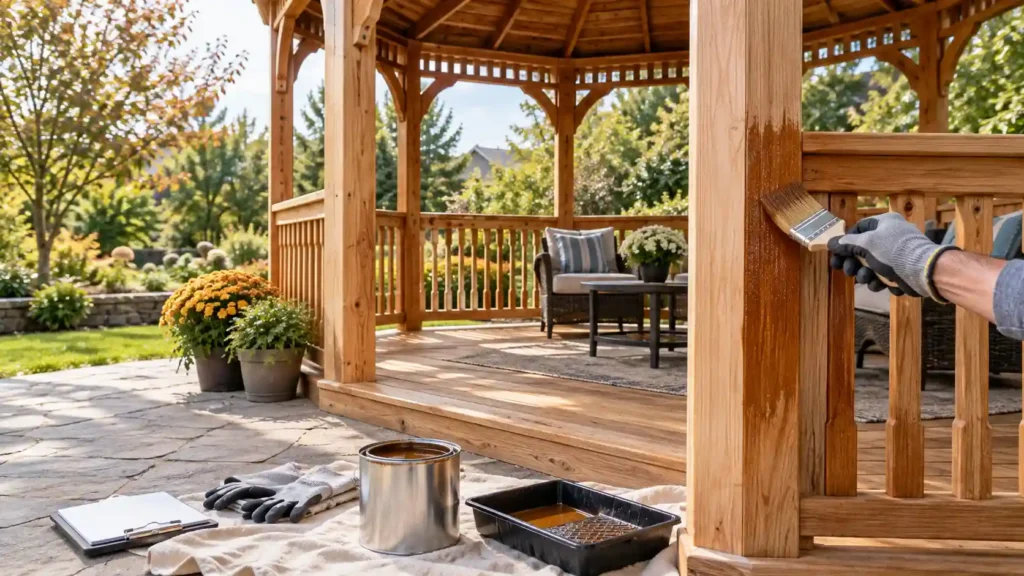
Work in manageable sections. Keep the edge wet where the label directs, and brush out runs before they set. Use safe access equipment for high beams; do not stand on rails or roof panels.
Follow the label for drying, cleanup, and disposal. Never leave oil-stain-soaked rags piled up; they can heat and ignite. Follow the product’s safe storage and disposal instructions for used rags. Keep people and pets off treated surfaces until the product permits use.
A Simple Record for Your Gazebo
Save one note on your phone after each job:
| Detail | What to record |
|---|---|
| Finish | Brand, exact product, and color |
| Date | When each section was coated |
| Preparation | Cleaner used and any finish removed |
| Application | Number of coats and areas treated |
| Photos | Each side plus a close view of the rails |
| Next check | A date to inspect the finish |
Photos taken from the same angle make wear easier to compare. The product name also saves guesswork when you buy the next can.
Common Questions
Should I seal my gazebo every year?
Inspect it every year and follow any yearly care rule in the kit manual. A full new coat may be needed, but adding more to a sound finish is not always helpful.
Can I stain over the old stain?
Sometimes. The old finish must be sound, clean, and compatible with the new product. A peeling coat or a change of finish may require removal first.
Do I have to sand the whole gazebo each time?
No. Some penetrating finishes allow a maintenance coat after cleaning and drying. Sanding needs depend on the old coating, surface damage, and product directions.
Can I use the same stain on the frame and floor?
Only if the label approves both uses. Floors, steps, and seats need a finish suited to their wear and contact. Check that detail before buying enough for the whole structure.
Does the roof need the same treatment?
A wooden frame with metal roof panels needs separate care for each material. If the roof has wood shingles or shakes, follow the roofing maker’s advice. Do not assume a frame or deck stain is approved for roofing.
What should I do if the finish wears out in less than a year?
Check drainage, wood moisture, cleaning, and whether the right amount was applied. Contact the finish maker with photos and the product details before repeating the same process.
Keep the calendar as a reminder to inspect. Let the wood’s condition, the finish instructions, and your gazebo manual guide the work.