A dirty gazebo roof can make the whole yard look tired. Yet a harsh cleaner or strong jet of water can cause more harm than the dirt. It may scratch clear panels, strip a metal finish, tear fabric, or loosen shingle granules.
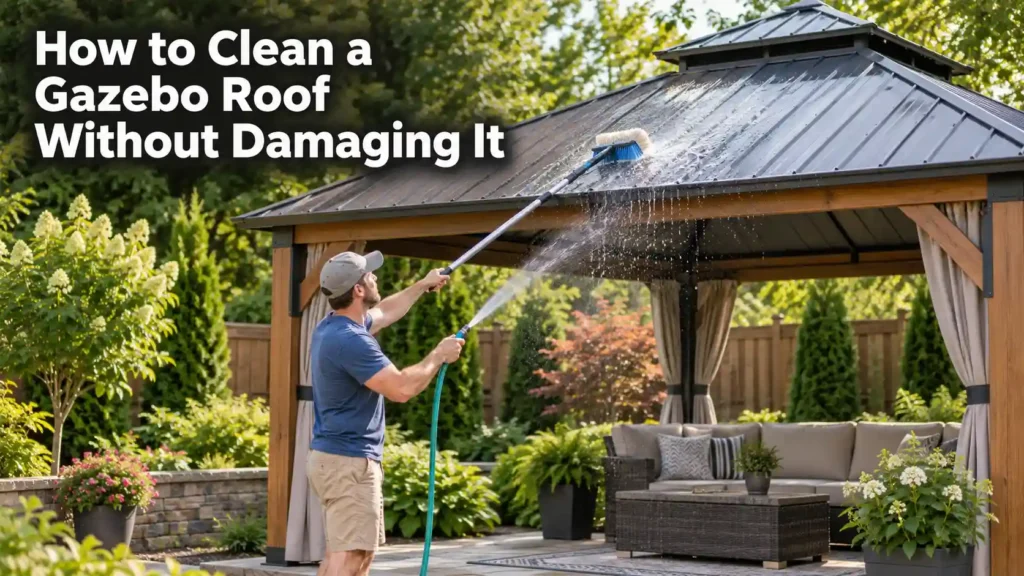
The safest method is usually simple. Remove loose debris, use a mild cleaner approved for the roof, and rinse with low-pressure water. Work from the ground when you can. Never walk on a gazebo roof unless its maker says it is built for that purpose.
Your owner’s manual should always come first. Roof materials and coatings vary, even when two gazebos look alike.
Quick answer
Use a hose with a gentle spray, a soft brush on an extension pole, and a mild soap approved by the manufacturer. Clean on a cool, calm day. Work in small areas and rinse before soap dries.
Skip a pressure washer unless the gazebo maker gives clear instructions for its use. Do not use rough pads, metal scrapers, strong solvents, or one bleach mix on every roof. If you cannot reach the roof while staying stable on the ground or a safe ladder, hire a trained cleaner.
Choose the method for your roof material
| Roof type | Safer basic method | Main things to avoid |
|---|---|---|
| Painted or powder-coated metal | Mild soap, soft cloth or brush, and a gentle hose rinse | Abrasive pads, strong solvents, hard rubbing, and water forced into seams |
| Polycarbonate or acrylic panels | Rinse grit first, wash with an approved mild soap and soft cloth, then rinse at once | Dry scrubbing, sharp tools, harsh cleaners, direct sun, and standing on panels |
| Fabric or vinyl canopy | Remove loose debris with a soft brush, use a label-approved mild solution, and rinse with a hose | Power washing, stiff brushes, hot water, and bleach unless the maker allows it |
| Asphalt shingles | Inspect from the ground and have algae or moss treated under the shingle maker’s directions | Pressure washing, scrubbing, and walking on the roof |
| Wood shakes or shingles | Clear loose debris gently and use a wood-roof product approved by the maker | High pressure, hard scraping, and sealing damp or decayed wood |
Check the roof before you wash it
Cleaning should not begin with soap. Start with a slow walk around the gazebo. Look from several angles, but stay on the ground.
Check for:
- Loose, bent, or missing roof parts
- Cracked clear panels
- Torn or sagging fabric
- Lifted shingles
- Open seams or failed sealant
- Rust around fasteners or cut edges
- Soft or dark areas in wood
- Blocked gutters and drain holes
- Bird nests, wasp nests, and low electrical wires
- Water near lights, fans, outlets, or extension cords
Repair a weak roof before cleaning it. Water pressure can turn a small crack or loose edge into a leak. Stop if you find a structural fault, exposed wire, large nest, or active insects.
Find the manual or model number next. The maker may list a certain soap, brush, or water limit. It may also warn against products that can void the finish warranty.
Gather a gentle cleaning kit
Most jobs need fewer tools than you might expect:
- Garden hose with an adjustable spray nozzle
- Long extension pole
- Soft-bristle brush or soft wash pad
- Microfiber cloths
- Two buckets
- Mild soap approved for the roof material
- Clean towels for spot drying
- Work gloves and eye protection
- Plastic sheet or old towels for items below the roof
A soft brush should bend under light pressure. It should not feel sharp against your hand. Keep one clean wash pad just for clear plastic panels. Dirt caught in an old deck brush can leave fine scratches.
Avoid steel wool, scouring pads, wire brushes, razor blades, and hard scrapers. Gasoline, paint thinner, acetone, and other strong solvents can harm many roof finishes and plastics.
Pick the right day
Choose a cool, overcast day with little wind. Morning can work if the roof is dry and the sun will not heat it too soon.
Hot panels make water and soap dry fast. Dried cleaner can leave a film or mark the finish. Palram also tells owners not to clean its polycarbonate panels in direct sunlight.
Rain is not useful during the wash. It can dilute the cleaner and make the work area slick. Wind may blow cleaner into your eyes, plants, or nearby doors.
Turn off power to gazebo lights, fans, and outlets before water comes out. Follow the product manual if any electrical part cannot get wet. Move cushions and small furniture away. Cover items that must stay in place.
How to clean a gazebo roof step by step
1. Work from the ground when possible
Fit a soft brush or wash pad to an extension pole. A long pole lets you reach many small gazebo roofs without climbing. Keep both feet on firm, dry ground.
Never step on polycarbonate or fabric panels. A roof may also hide weak wood, loose fasteners, or slick algae. Even a roof that holds snow may not be safe for a person’s point load.
2. Remove loose leaves and twigs
Use a soft brush to pull leaves toward the roof edge. Follow the roof slope. Do not push debris under overlapping panels, flashing, vents, or shingles.
Treat clear plastic with more care. Palram warns against dry cleaning because sand and dust can scratch the surface. Use a gentle rinse first when grit is present. Lift larger leaves by hand only when they are within safe reach.
Clear the gutters and drain outlets as well. Standing water feeds algae and can stain the roof edge.
3. Test the cleaner
Mix the cleaner according to its label. More soap will not clean faster. A strong mix is harder to rinse and may leave a dull film.
Try it on a small, hidden area. Let the spot dry. Check for a color change, haze, loss of gloss, or a soft surface before you continue.
Never assume a household cleaner is safe because it is called natural. Acids, oils, and rough powders can still mark coatings or clear plastic.
4. Wet the roof gently
Use a wide, low-pressure spray. Begin at the high point and let water run down the slope. Keep the spray pointed with the laps, not upward under them.
Give bird droppings and tree sap time to soften. Rubbing a hard spot at once can grind it into the finish.
5. Wash a small section
Apply the mild solution with the soft brush, cloth, or pad. Use light strokes. Work from the upper area toward the edge so dirty water does not cross a clean section.
Clean only an area you can rinse at once. Do not let soap dry on the surface.
6. Rinse well
Rinse from top to bottom with clean, cool water. Watch the runoff. Keep going until no foam remains.
Do not aim water into joints, ridge caps, roof vents, fabric seams, or the wall connection. A roof sheds rain from above. Water driven upward can enter places that stay dry in normal weather.
7. Inspect the clean roof
Look for leaks, loose screws, worn washers, split sealant, and new areas of rust. Check the floor below for drips. A stain that returns after rain may be a leak, not dirt.
Let a fabric canopy dry fully before you fold or store it. Trapped moisture can cause odor and mildew.
How to clean a metal gazebo roof
Painted steel and aluminum roofs often need only water and mild soap. Rinse away grit first. Then wipe or brush with light pressure before a full rinse.
Metal finish guidance from the Metal Construction Association warns against excessive pressure, abrasive cleaners, and aggressive solvents. Such methods can scratch or weaken a coated finish. The association also advises cleaning at a moderate temperature so the solution does not dry too fast. Your gazebo maker’s directions still control because coatings differ.
Pay close attention to the fasteners and panel edges. Brown marks may be rust from a screw or exposed cut, not a surface stain. Hard scrubbing will not repair failed paint. Let the area dry, then follow the maker’s touch-up or part replacement process.
White mineral spots can form where hard water dries. Avoid reaching for vinegar until the manufacturer approves it. Acid may dull some metal finishes. A final rinse with clean water and prompt spot drying may prevent new marks.
How to clean a polycarbonate gazebo roof
Clear or tinted polycarbonate scratches more easily than metal. Fine scratches may not affect the roof at first, but they can make it look cloudy.
Start with a low-pressure rinse to float off dust. Wash with an approved mild soap and a clean, soft cloth or sponge. Rinse right away with cold, clean water. Work out of direct sun.
Palram’s care advice says not to use abrasive or highly alkaline cleaners. It also warns against sharp tools, razors, gasoline, and dry cleaning. Test any cleaner in a hidden area first. Never stand on a panel.
A nearby pressure-washer tip can pierce or tear a plastic panel. It may also force water into panel channels and seals. Use a normal hose unless the maker gives another method.
Do not scrape off dried bird waste. Soak it with water, add the approved soap, and let it soften. Lift it with a wet cloth. Repeat the soak instead of adding force.
How to clean a fabric canopy
Read the sewn-in care label before you mix a cleaner. Fabric may be polyester, acrylic, polyethylene, or vinyl-coated material. Each type can react in a different way.
Brush away dry leaves with a soft brush. Apply a mild solution only if the care label permits it. Use light hand pressure and rinse with a garden hose.
ShelterLogic advises against power washing and hard-edged brushes because they can puncture a canopy cover. The company also recommends routine checks for dirt, mold, and tears.
Do not put a removable top in a washing machine unless its label says you can. The cycle may stretch seams or remove a water-resistant coating. Let the top air-dry all the way before storage. Never fold it while damp.
Mildew on the surface may look like a cleaning problem, but growth can also sit inside a worn coating. Use only the treatment named by the fabric maker. Chlorine bleach can fade color or weaken some fibers.
How to clean an asphalt-shingle gazebo roof
Use the same caution you would use on a house roof. Asphalt shingles have a layer of surface granules. Strong water and scrubbing can remove them.
The Asphalt Roofing Manufacturers Association says not to use a pressure washer, brush, or broom to remove algae from asphalt roofing. It also notes that cleaning makes a roof slippery and encourages owners to use a professional. Cleaner directions vary by shingle maker.
Do not treat every dark streak with a homemade bleach mix. Confirm that the mark is algae and find the shingle brand first. Moss, lichen, tree waste, and damaged material may need different care.
You can clear leaves from the ground with a roof-safe tool if they come away without rubbing the shingles. Work down the slope. Hire a trained roof cleaner when the job involves growth, chemicals, or roof access.
How to clean a wood-shake gazebo roof
Wood roofs need gentle care and good drying. Remove loose leaves without digging into the grain. Keep gutters clear so water can leave the roof.
Dark wood may come from dirt, mildew, tannins, metal marks, or decay. One cleaner will not solve every cause. Ask the gazebo or shake maker which product suits the wood and any old finish.
High pressure can cut soft fibers and leave a rough, fuzzy face. It may also drive water under the shakes. Do not seal or stain the roof until the wood is sound and dry. Soft areas, loose shakes, or heavy moss call for a wood-roof professional.
Should you pressure wash a gazebo roof?
Usually, no. A pressure washer adds risk without adding much value to routine cleaning.
It can:
- Cut or haze polycarbonate
- Tear a fabric canopy
- Strip paint or powder coating
- Remove granules from asphalt shingles
- Etch soft wood fibers
- Force water below overlaps and seals
- Turn a small loose edge into a leak
Some metal-roof makers may allow controlled pressure washing. Use it only when your exact manual gives a pressure, nozzle, distance, and spray direction. Follow every limit and test a hidden area. A garden hose is the safer default.
How to treat common roof stains
| Stain or growth | Safer first response | When to stop |
|---|---|---|
| Bird droppings | Soak with water, add approved mild soap, and lift with a soft wet cloth | Stop if the mark needs scraping or a strong solvent |
| Pollen and dust | Rinse gently, then use a soft wash pad if needed | Stop if dry grit begins to drag across clear plastic |
| Tree sap | Soften it and use only a spot cleaner approved for the material | Stop if the finish becomes dull, soft, or sticky |
| Green film on metal or plastic | Test an approved cleaner on a hidden spot and rinse well | Stop if growth sits inside a seam or under a panel |
| Algae or moss on shingles | Check the shingle maker’s method and use a trained roof cleaner | Do not pressure wash or scrub it away |
| Rust marks | Find the failed fastener, edge, or coating after the roof dries | Do not grind through the surrounding finish |
| Mildew on fabric | Follow the canopy care label and rinse well | Stop if the fabric is weak, torn, or losing its coating |
Ladder safety matters more than a clean roof
Ground-level cleaning is the best choice. If you still need a ladder, inspect it for damage and slippery dirt. Set it on firm, level ground. Keep it away from wires and wet electrical equipment.
Face the ladder and keep three points of contact. Stay between the side rails. Never stand on a stepladder’s top step or cap. Do not lean sideways to gain a few inches.
OSHA includes each of those steps in its stepladder safety guidance for workers. The same habits can lower risk at home. A helper can steady the work area and manage the hose, but a helper cannot make an unsafe reach safe.
Do not climb with a full bucket. Do not place a ladder on furniture, loose boards, or a wet deck. Call a professional if safe access is in doubt.
How often should you clean the roof?
Clean when debris begins to hold water or block drainage. For many gazebos, a light clean in spring and after the main leaf fall is enough. Wet, shaded sites may need more checks.
Inspect the roof after strong wind, hail, or heavy snow. Clear storm debris once conditions are safe. Look again before winter and before you put a fabric cover into storage.
Too much washing can wear a surface. A quick rinse or leaf removal is often better than a full soap wash.
Mistakes that cause avoidable damage
Using one cleaner on every material
A product that works on bare masonry may harm clear plastic, coated metal, fabric, or shingles. Match the cleaner to the exact material and finish.
Cleaning in hot sun
Soap can dry before you rinse it. The result may be streaks, haze, or a dull film.
Scrubbing before rinsing grit
Dust and sand act like fine sandpaper. Rinse them from clear panels and coated metal before wiping.
Aiming the hose upward
Water can pass under roof laps and into seams. Spray with the natural path of rainwater.
Treating a leak as a stain
Repeated dark marks, wet wood, and rust around a seam may point to a repair need. Cleaning the mark will not stop the water.
Walking on the roof
Gazebo panels can bend, crack, or pull away from fasteners. A slick roof also creates a serious fall risk. Use an extension tool or hire a professional.
When to hire a professional
Get help when:
- The roof cannot be reached without climbing on it
- The structure sags, moves, or has loose panels
- You see exposed wires or water near electrical parts
- Asphalt shingles have broad algae, moss, or lichen growth
- Wood feels soft or shows signs of decay
- A fabric top is torn near a load-bearing seam
- Rust has spread below a coating
- A leak continues after the roof is clean and dry
- The roof is steep, high, or above uneven ground
Tell the cleaner what the roof is made from. Ask how the crew will protect the finish, seams, plants, and electrical parts. A good provider should be able to explain the cleaner and water pressure before work starts.
Frequently asked questions
Can you use dish soap on a gazebo roof?
A small amount of mild dish soap may be suitable for some coated metal, plastic, and fabric roofs. Check the gazebo maker’s care guide first. Test the mix in a hidden spot and rinse it off before it dries.
Can you use bleach on a gazebo roof?
Do not use bleach as a general roof cleaner. It may fade fabric, affect metal finishes, harm plants, or react with other products. Some shingle makers give a specific bleach method for algae. Follow that exact guidance or hire a trained cleaner.
Never mix bleach with ammonia, acids, vinegar, or another cleaner. The mix can release dangerous gas.
Can you clean a gazebo roof from the ground?
Yes, in many cases. Use a soft roof brush or wash pad on a long pole. Add a hose with a wide, gentle spray. Stay clear of overhead power lines and do not reach so far that you lose balance.
What is the safest way to remove bird droppings?
Soak the spot with cool water. Apply a mild, approved soap and wait for the waste to soften. Lift it with a wet microfiber cloth or soft pad. Do not scrape it from clear plastic or painted metal.
How do you clean a high gazebo roof?
Use an extension pole from firm ground if the tool gives you full control. Hire a professional when the ridge or upper panels remain out of reach. Climbing onto the roof is not a safe shortcut.
Can you clean polycarbonate panels in direct sunlight?
No. Wait for a cool, shaded period. Heat can make cleaner dry too fast and leave marks. Palram also tells owners not to clean its polycarbonate panels in direct sun.
Final take
A gentle method protects more than the roof’s appearance. It helps preserve coatings, clear panels, seams, and water resistance.
Identify the material first. Rinse away grit, use an approved mild cleaner, and work with soft tools. Keep water pressure low and your feet off the roof. When growth, damage, or height adds risk, let a trained professional handle the job.