Homeowners always find it difficult to decide between a gazebo and a playhouse for their backyard. It is not only about designing space but also an area where we can relax, play and spend quality time together. Both improve the appearance and functionality of the backyard but they are built for different purposes and offer different benefits.
A gazebo provides a comfortable outdoor space where families can relax, dine and entertain guests. But a playhouse is built specifically for children and gives them a dedicated place to play and explore their creativity. The choice depends on your family’s lifestyle, the ages of your children, your budget and the size of your backyard.
This guide helps you make an informed decision between gazebos and playhouses by comparing their features, evaluating their costs and determining which option provides value for your family.
What is the Difference Between Gazebo and Playhouse?
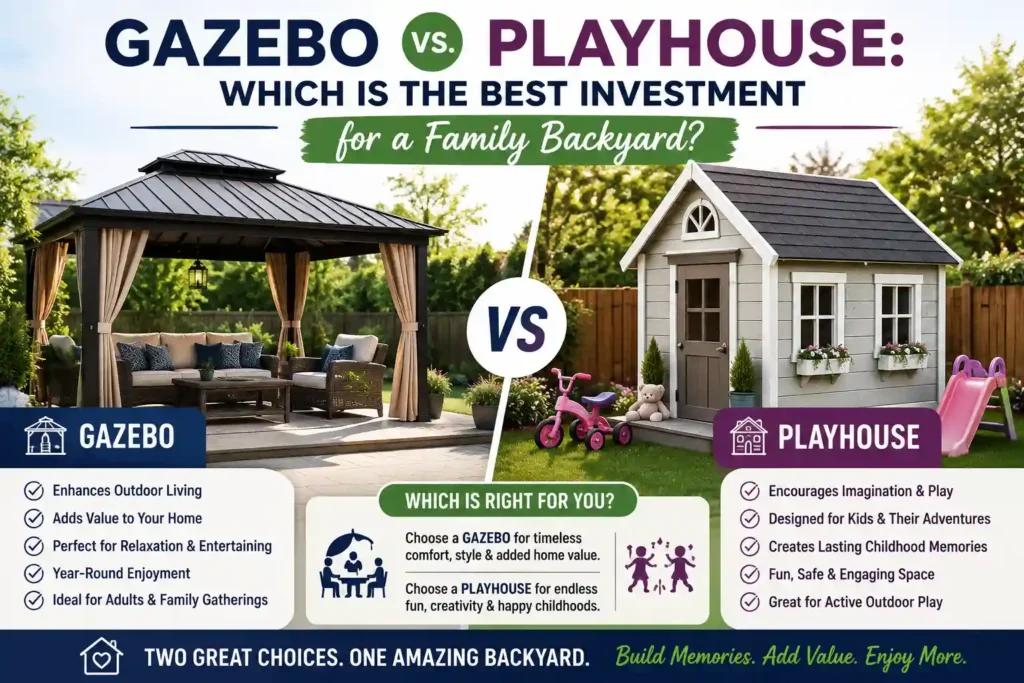
A gazebo is an outdoor shelter for family gatherings and relaxation and a playhouse is a child sized structure designed for fun and play.
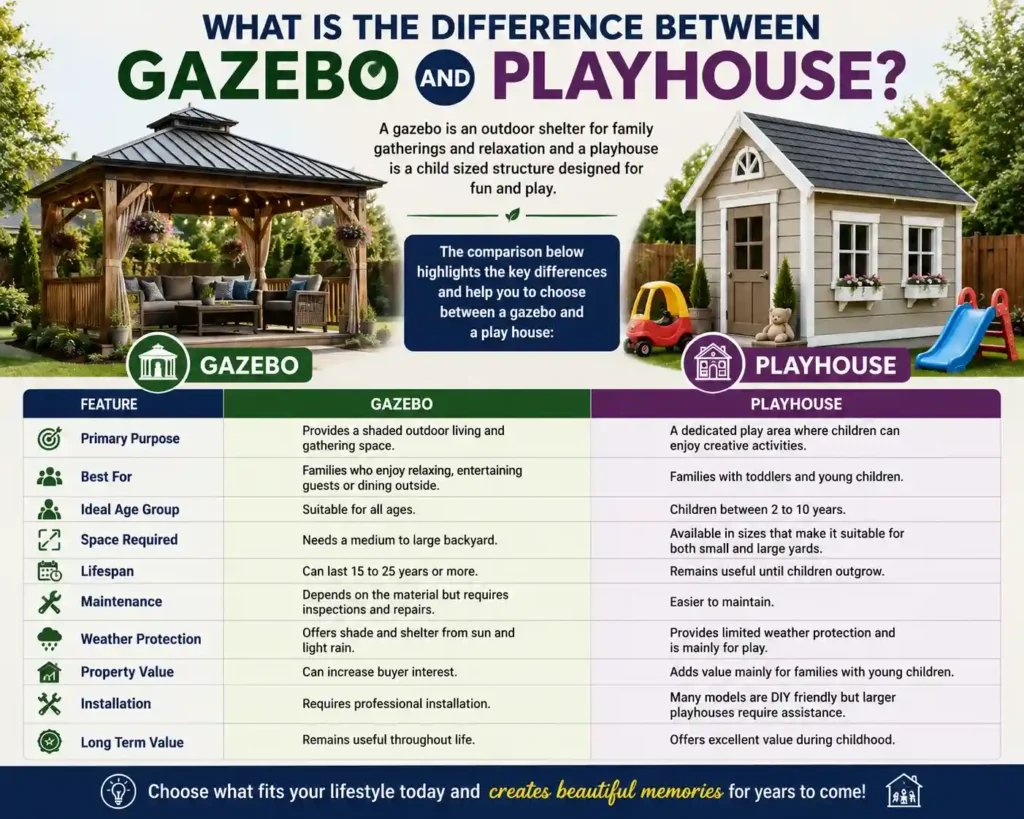
The comparison below highlights the key differences and help you to choose between a gazebo and a play house:
| Feature | Gazebo | Playhouse |
| Primary Purpose | Provides a shaded outdoor living and gathering space. | A dedicated play area where children can enjoy creative activities. |
| Best For | Families who enjoy relaxing, entertaining guests or dining outside. | Families with toddlers and young children. |
| Ideal Age Group | Suitable for all ages. | Children between 2 to 10 years. |
| Space Required | Needs a medium to large backyard. | Available in sizes that make it suitable for both small and large yards. |
| Lifespan | Can last 15 to 25 years or more. | Remains useful until children outgrow. |
| Maintenance | Depends on the material but requires inspections and repairs. | Easier to maintain. |
| Weather Protection | Offers shade and shelter from sun and light rain. | Provides limited weather protection and is mainly for play. |
| Property Value | Can increase buyer interest. | Adds value mainly for families with young children. |
| Installation | Requires professional installation. | Many models are DIY friendly but larger playhouses require assistance. |
| Long Term Value | Remains useful throughout life. | Offers excellent value during childhood. |
How to Decide Between Gazebo and Playhouse?
Some of these factors will help you decide on a gazebo and playhouse and help you to invest in something that provides lasting value.
Children’s Age and Interests
The interests of children change quickly as they grow and what excites them today may no longer appeal to them a few years later.
- Toddlers: A playhouse is an exciting choice for toddlers. They enjoy playing and exploring small spaces and help to develop their cognitive abilities. A gazebo is still useful in these years but its benefits are mainly for parents.
- Young Children: 5 to 10 year old children usually enjoy a playhouse as their imagination is highly active and they turn it into a cafe, castle, school or shop .A gazebo creates a comfortable place for family meals, birthday parties and outdoor activities.
- Older Kids: Children in their pre-teen years spend more time playing sports or socializing with friends. A playhouse may no longer receive daily use. A gazebo becomes increasingly practical as it provides a comfortable place for homework and board games.
- Teenagers: Playhouses no longer match the lifestyle of teenagers.They use gazebo to study, spend time with friends, listen to music or enjoy meals outdoors with the family.
What Happens When the Kids Grow Up?
The interests of children naturally change as they grow and they prefer other activities. Some families convert the playhouse into a storage shed or a gardening space while others remove it completely. A gazebo continues to provide a living area that every member can enjoy regardless of age.
How Many Years Will Your Kids Actually Use It?
Most children actively enjoy a playhouse for around 6 to 10 years. They lose interest at the age of 10 to 12 because their hobbies and social activities change.
Can a gazebo actually function as a play space for toddlers or is it a safety hazard?
It can absolutely work but it requires some modification. If you add temporary outdoor play mats and a low ground table then it becomes an excellent play zone. You can add baby gating to stairs and open railings.
Backyard Size and Available Space
Measure the available area and think about how your family already uses the yard and then make a purchase.
- Small Yards (Up to 2,500 sq. ft.): A playhouse is usually the better fit for small yards because it takes up less space and can be placed in the corner. A playhouse of about 4×4 ft. to 6×6 ft measurement can be a good choice. Choose a smaller model of 8×8 ft.. or 10×10 ft. to provide a comfortable seating area if you need a gazebo.
- Medium Yards (2,500–5,000 sq. ft.): Medium sized backyards offer enough space for both. Larger playhouses of 6×8 ft. to 8×10 ft. fit comfortably without limiting the available outdoor space. You can also add a gazebo measuring 10×10 ft.. to 12×12 ft. which serves as the main gathering area.
- Large Yards (5,000+ sq. ft.): Large backyards provide the flexibility to create separate areas for relaxation, dining, gardening and children’s activities. A large playhouse measuring 8×10 ft. to 10×12 ft. gives children large space to play. Plus a 12×14 ft.. or larger gazebo creates a spacious area for family gatherings.
Which Leaves More Usable Outdoor Space?
A playhouse takes up less space than a gazebo but the choice depends on how you plan to use your backyard. A playhouse leaves more open space for other activities but a gazebo occupies more space and works well for the whole family.
Is a Gazebo or an Elevated Playhouse Better for a Small and Sloped Backyard?
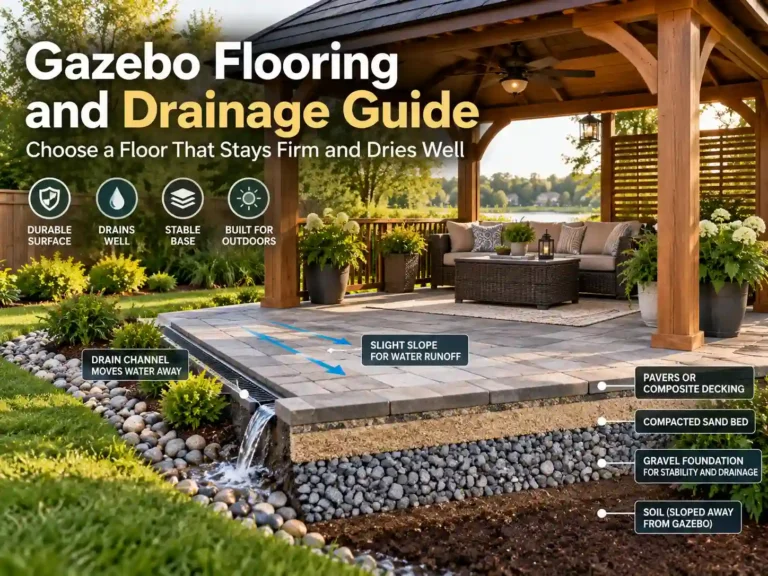
It depends on your yard’s layout but an elevated playhouse is easier to adapt to sloped ground. Its support can be installed at different heights. A gazebo requires a flat and stable foundation to ensure its long term stability.
Safety Considerations
A playhouse generally offers better safety for families with young children because it is specifically for children’s use. Most playhouses have rounded edges, child friendly doors, non toxic materials and a lower height which reduces the risk of injuries.
While a gazebo is also safe when properly secured and maintained but it is designed for relaxation rather than active play. It can also be a safe option if you inspect it regularly for sharp edges and maintenance. In short, a playhouse is the best option as it provides safety for children.
Maintenance and Upkeep
A playhouse is easier to maintain than a gazebo because it is smaller and has fewer parts to care for. Plastic playhouses can be cleaned easily with mild soap and water while gazebos require regular sweeping and cleaning of the roof, posts and flooring.
Plastic and vinyl playhouses require little to no painting. But wooden gazebos and wooden playhouses need occasional painting or staining to protect them from weather damage.
In terms of repairs, playhouses usually require fewer and less expensive fixes and gazebos may need canopy replacement, roof repairs or hardware maintenance.
Which Option Fits Your Wallet?
A lower upfront cost does not always mean a better investment. By comparing the total expenses will help you choose the option that fits both your budget and future needs.
- Average Purchase Price: Plastic playhouses typically cost around $100–$800 and wooden playhouses range from $800–$3,000. While the Gazebos start at around $150–$800 for soft top models and can cost $2,000–$10,000 for hardtop or custom built designs.
- Installation Costs: Most playhouses are generally less expensive to install and can be assembled for $0–$300. But permanent gazebos often require professional installation which costs around $500–$2,500.
- DIY vs. Professional Installation: DIY installation works well for many playhouses and small gazebos with assembly costs ranging from $0–$200. However, larger permanent gazebos need professional assembly which typically costs $500–$2,500+ and makes DIY the more budget friendly option.
- Budget Friendly vs. Premium Options: A basic playhouse is a good choice for families with a budget of under $2,000. However, if your budget is $5,000 or more then investing in a premium gazebo offers long term value for the whole family.
Which Offers Better Value for Different Budgets?
If your budget is under $2,000 then a playhouse and soft top gazebo offers the best value. With a budget of $2,000–$5,000 both options are worth considering. If your budget is above $5,000 then a custom built gazebo is the better investment as it remains useful for many years.
Calculate Hidden Costs
The purchase price is only part of the total investment. Considering the installation, maintenance and accessories prices helps you plan your budget more accurately. Here are the hidden costs for gazebos and and playhouses that we often overlook:
| Hidden Cost | Gazebo (Estimated Cost) | Playhouse ( Estimated Cost) |
| Site preparation & foundation | $300–$3,000+ | $100–$1,500 |
| Professional assembly/installation | $500–$3,500+ | $150–$1,500 |
| Permits (if required) | $50–$500 | $0–$300 |
| Outdoor furniture or interior furnishings | $300–$3,000+ | $100–$1,000 |
| Electrical work (lighting, outlets, fans) | $200–$2,000+ | $100–$1,000 (if adding lights or power) |
| Screens, curtains, or weather protection | $100–$1,000 | $50–$300 (optional weatherproofing) |
| Heating or cooling accessories | $100–$1,000 | Usually not needed |
| Painting, staining, or sealing | $150–$800 every 2–3 years | $100–$500 every 2–3 years |
| Roof repairs or replacement | $200–$2,500+ | $100–$1,000 |
| Safety surfacing (mulch, rubber mats, etc.) | Usually not required | $100–$1,000 |
| Replacement parts or accessories | $50–$500/year | $20–$500/year |
| Cleaning & pest control | $50–$300/year | $20–$200/year |
What are the hidden costs of installing a hardtop gazebo that people don’t tell you about?
The biggest hidden expenses are ground preparation (pouring a level concrete pad or building a reinforced deck) and anchoring permits. Depending on your local HOA or city building codes the permanent gazebos over a certain square footage may require a building permit.
Which Offers the Best Long Term Value?
A gazebo is generally the better long term investment because it provides lasting value for the entire family. It can be used for relaxing, entertaining and outdoor dining for many years. Whereas a playhouse is a great investment if you have young children but they will likely outgrow it over time. If your priority is long-term usability and versatility then choose a gazebo. If your focus is creating a fun space for your kids during their early years then go for a playhouse.
Will a backyard playhouse hurt my chances of selling my home later if the buyers don’t have kids?
Not usually. Because a well maintained wooden playhouse can often be repurposed as a storage shed or garden house. You can remove other plastic playhouses before selling. If it does not take up too much yard space then it is unlikely to affect your home’s resale value significantly.
Can You Have Both a Gazebo and a Playhouse?
Yes, if you have enough space and budget then combining a gazebo and playhouse can give your family the best of both worlds. Place the playhouse within view of the gazebo so parents can relax or entertain guests while keeping an eye on their children. This layout creates separate spaces for play and relaxation without sacrificing supervision.
Can I Turn a Gazebo Into a Playhouse Instead of Buying Both?
Yes, you can make a gazebo more kid friendly but converting it into a fully enclosed playhouse is usually not the most practical or cost effective option. Instead create a dedicated play corner with outdoor toys, child sized furniture or removable fabric panels. This lets children enjoy the space while keeping the gazebo functional for the whole family as their needs change.
Should We Build a Gazebo Now if We Plan to Have Kids Later or Wait for a Playhouse?
If you don’t have children yet but plan to in the future then building a gazebo first is often the better long term investment. It provides an outdoor space to relax while adding lasting value to your backyard. When children arrive then the gazebo can double as a shaded play area or a comfortable spot for parents to supervise outdoor activities.
A playhouse on the other hand is for a specific stage of childhood and can be added later without affecting your overall backyard layout. This approach lets you enjoy your investment now while keeping your options open for the future.
When Is a Convertible Gazebo the Best Option?
A convertible gazebo is ideal if you want one outdoor structure that can adapt to your family’s changing needs. It can be used for relaxing, outdoor dining and entertaining today. Then easily become a shaded play area for children later without major renovations. A convertible gazebo is the best option if you:
- Have young children or plan to have kids in the future.
- Want one structure that everyone in the family can use.
- Have a small or medium-sized backyard with limited space.
- Prefer a long-term investment that stays useful for years.
- Want the flexibility to add a play corner, outdoor classroom, or hobby space as your family’s needs change.
Which Holds Up Better in Bad Weather Among Plastic or Wooden Playhouses?
Both gazebo and playhouse materials have strengths and weaknesses. Plastic playhouses won’t rot and handle rain well but they are lightweight and should be securely anchored in windy areas. They can also fade or become brittle after years of sun exposure. Wooden playhouses are generally sturdier and perform better in strong winds. Although they require regular painting or staining to protect against moisture and decay.
Does a Metal Hardtop Gazebo Get Too Hot During Summer?
While the metal roof and frame can become hot in direct sunlight but the shaded area underneath usually remains comfortable. Choosing a hardtop gazebo with vented, double roof design helps hot air escape and improves ventilation. Adding an outdoor ceiling fan can also make the space much cooler on hot summer days.
Will a Gazebo or Playhouse Cause Problems With HOA Rules?
It depends on your homeowners association’s regulations. Open sided gazebos are often viewed as landscape features and may be easier to approve. Playhouses, especially large elevated models or brightly colored plastic designs are more likely to face restrictions. Before installing either structure check your HOA’s rules regarding detached structures. These include their height limits, setbacks and required approvals to avoid costly surprises.
Conclusion
Choosing between a gazebo and playhouse depends on your family’s needs, budget and long term plans. A gazebo is a versatile outdoor structure that offers year round use for relaxing and spending time together.
Whereas playhouses on the other hand are specifically for children and provide a dedicated space for imaginative play. Consider factors such as upfront costs, hidden expenses, maintenance, available backyard space, your children’s ages and future usability before investing.
If your budget and yard allow then combining both structures creates the perfect balance of family relaxation and play. However, the best choice is the one that fits your lifestyle while providing value as your family grows.
FAQs
Is a Gazebo Safer Than a Playhouse?
Both can be safe when properly installed and maintained. However, gazebos generally have fewer climbing features while playhouses require regular safety checks to reduce the risk of falls or injuries.
Does a Gazebo Increase Property Value?
A well built permanent gazebo can improve your backyard’s appeal and may increase your home’s value by creating an attractive outdoor living space.
Which Is Better for a Small Backyard?
A gazebo is usually the better choice for a small backyard because it provides a multi-purpose space the whole family can enjoy. However, a compact playhouse may be a better fit if your main priority is your children’s play area.
Can I Convert a Playhouse Into Another Backyard Feature Later?
Yes. Many homeowners repurpose old playhouses into garden sheds, storage spaces, potting sheds, hobby rooms or small outdoor retreats once their children outgrow them.