If your gazebo canopy is torn, faded or leaking then you don’t always need to replace the entire gazebo. The replacement of the gazebo canopy can restore your outdoor space while saving you time and money. The key is choosing one that matches your frame, roof style and intended outdoor use.
If you’re replacing an old gazebo cover or buying a durable outdoor canopy for the first time, it’s worth knowing what features matter most. The right material, roof style and fit will help your gazebo withstand sun, rain and everyday outdoor use.
This guide covers everything you need to pick the right replacement gazebo canopy. You’ll get practical tips for measuring your frame, checking canopy materials and choosing the best option for your outdoor space.
We contacted Sean Hennessy (SacramentoShamrock) who builds custom gazebos to better understand common canopy issues. He shared practical maintenance tips and reviewed this guide also to ensure you get accurate information.
What is a Gazebo Canopy?
A gazebo canopy is the protective covering of a gazebo frame. It is made from durable fabrics that protect the outdoor space from sun and rain. It also reduces the UV exposure and provides shade. Since the canopy is always open to sun and changing weather, it needs replacement.
What is an OEM Replacement Canopy?
An OEM (Original Equipment Manufacturer) replacement canopy is produced specifically for a particular gazebo model by the original manufacturer.
These canopies are designed using the exact dimensions, roof shape, attachment points and fabric specifications of the original gazebo. As they are costly but they provide the best possible fit and usually require no modification during installation.
What is a Universal Replacement Canopy?
A universal replacement canopy fits multiple gazebo models instead of one specific frame but the fit may not always be perfect. Small differences in roof slope, vent size or attachment locations can lead to loose fabric or minor installation adjustments.
Gazebo Canopy vs Gazebo Roof
A gazebo canopy is a replaceable fabric cover that attaches securely to a metal or wooden frame. It is lightweight, affordable and can be replaced once it tears out. Whereas gazebo roof refers to the permanent top structure of the gazebo frame.
Here’s a simple comparison of gazebo canopy and gazebo roof
| Feature | Fabric Canopy | Polycarbonate Roof | Metal Roof | Permanent Wooden Roof |
| Material | Polyester or acrylic fabric | Polycarbonate panels | Aluminum or galvanized steel | Cedar, pine, or hardwood |
| Replaceable | Yes | Usually no | Rarely | No |
| Weight | Lightweight | Moderate | Heavy | Heavy |
| Weather Resistance | Moderate | Excellent | Excellent | Excellent |
| UV Protection | Good to Excellent | Excellent | Excellent | Good |
| Maintenance | Medium | Low | Low | Medium to High |
| Average Lifespan | 2–8 years | 10–20 years | 15–25 years | 20+ years |
| Best For | Seasonal use | Everyday outdoor living | All-weather protection | Permanent backyard structures |
What is the difference between Frame Only and Canopy Only gazebos?
Yes. A complete gazebo usually needs both parts. A gazebo frame is the metal or wooden structure that supports the gazebo and keeps it stable. A gazebo canopy is the roof covering that provides shade and protection from rain. The frame provides strength, while the canopy provides shelter.
Should I get a gazebo with a permanent roof or a removable fabric canopy if I live in harsh weather?
It mainly depends on your climate and maintenance preferences. A permanent canopy is best for year round use, with excellent durability against snow, rain, and wind. A removable canopy is easier to remove and store before severe weather, helping extend the fabric’s lifespan.
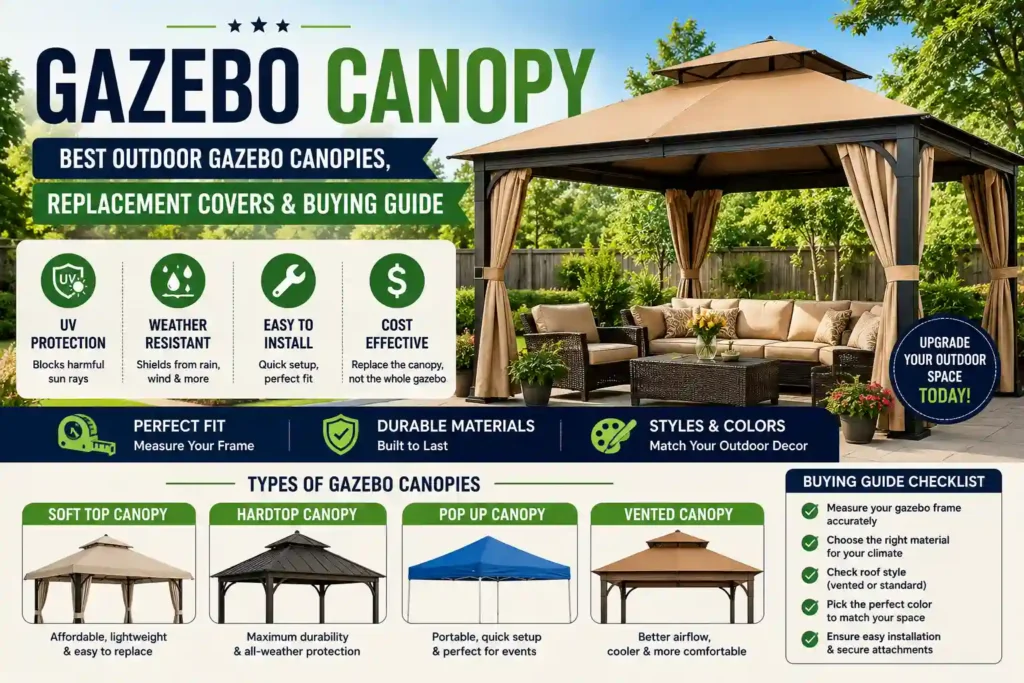
4 Types of Gazebo Canopies
Here are the four types of gazebo canopies:
Soft Top Gazebo Canopy
Soft top canopies are the most common type found in backyards. They are made from outdoor fabrics such as polyester or PVC coated polyester and attach directly to the gazebo frame with the help of pockets, hooks or clips.
Pros
- Affordable replacement cost
- Lightweight and easy to install
- Wide variety of colors and styles
Cons
- Can fade after prolonged UV exposure
- May tear during strong winds
- Requires occasional maintenance
The homeowners looking for an affordable and flexible shade for patios, gardens, decks and seasonal outdoor gatherings should install soft top gazebo canopies.
Are Soft Top Canvas Gazebos Actually Worth It Or Should I Just Save Up For A Hardtop?
It completely depends on your climate and patience. Soft-tops are great for renters or temporary seasonal shade .UV rays and wind will degrade a canvas top within 1 to 3 seasons. If you live somewhere with heavy snow or high winds, a hardtop saves your money.
Hardtop Gazebo Canopy
Hardtop gazebos actually use rigid roofing materials such as aluminum, galvanized steel or polycarbonate panels instead of fabric.
Pros
- Excellent durability
- Superior weather protection
- Better resistance to wind and heavy rain
Cons
- Higher initial cost
- More difficult installation
- Heavier structure
Homeowners who use their outdoor living space throughout the year and want a long lasting solution with minimal maintenance.
Pop Up Gazebo Canopy
Pop up gazebo canopies are designed for immediate events. Their frames allow quick setup and takedown which make them popular for temporary outdoor events.
Pros
- Extremely portable
- Ideal for temporary events
- Budget friendly
Cons
- Less durable frame
- Limited weather protection
They are best for camping trips, sporting events, outdoor exhibitions, beach outings and family picnics.
Vented Gazebo Canopy
A vented or double tier gazebo canopy two separate roof layers with a small opening between them. This design looks attractive and its benefits go far beyond its appearance.
Pros
- Better airflow
- Improved rainwater drainage
- Stylish appearance
Cons
- Higher cost
- Complex replacement
- Require occasional inspection
It is best in tropical regions, windy areas, outdoor dining backyards and for those who regularly amuse their guests.
How to Choose the Best Gazebo Canopy?
Before purchasing a new gazebo canopy, consider its size, roof style, fabric quality, weather resistance, and overall durability. Spending a little extra time comparing these features can save you money.
Choose the Correct Size
Gazebo canopies are available in several standard sizes, but choosing the right one involves more than matching the frame dimensions. Each size is designed for different outdoor spaces and often comes with specific roof styles.
The table below highlights the most common gazebo sizes, their compatible roof styles, and key buying tips to help you select the right canopy.
| Gazebo Size | Common Roof Styles | Buying Tips |
| 8×8 ft | Single tier+ Soft-top | Choose a lightweight + UV resistant canopy and verify corner pocket measurements before purchasing. |
| 10×10 ft | Single tier, Double tier (Vented), Pop up | Not all 10×10 replacement canopies fit every 10×10 frame + Always check the model number and roof dimensions. |
| 10×12 ft | Single tier+ Double tier | Measure the roof length, width and peak height carefully since manufacturers use different frame designs. |
| 12×12 ft | Double tier, Hardtop compatible, Hip Roof | Look for heavy polyester + PVC coated fabric with reinforced stitching for better durability. |
| 12×14 ft | Double tier, Hardtop+ Pavilion style Roof | Select a canopy with strong attachment points and high wind resistance to support the larger roof area. |
| Custom Sizes | Single tier + Double tier, Curved+ Hip Roof | Measure the existing frame precisely and compare every dimension before ordering a custom replacement canopy. |
What Is The Best 10×10 Pop Up Canopy For Casual Backyard Events That Won’t Snap In A Light Breeze?
Look at brands like ABCCanopy or Eurmax if you are on a budget or Commercial-grade E-Z UP if you want something that lasts.
Match Your Canopy to Your Climate
The most important factor in buying a guide is to overlook climate compatibility. The gazebo canopy for dry and sunny climate may not perform well in rainy or windy areas.
- Hot climates: Choose solution dyed acrylic or high GSM polyester with strong UV protection to reduce fading.
- Rainy regions: Look for waterproof fabrics and a steep roof to encourage water runoff.
- Windy areas: A vented double tier canopy offers better stability than a flat single tier design.
- Cold climates: Remove soft top canopies before heavy snowfall as snow can stretch and tear the fabric of the canopy and damage the frame.
Selecting a canopy that matches your local weather conditions can significantly extend its lifespan and reduce maintenance costs.
Match Your Roof Style
Roof style is just as important as size. Even if the canopy dimensions are correct, the wrong roof design can cause loose fabric, water pooling or difficulty during installation.
Here are the most common gazebo canopies for different roof styles you’ll come across.
- Single-Tier Roof Canopy: A single-tier canopy is designed for gazebos with one continuous roof section. It is lightweight, easy to install and commonly used on standard backyard gazebos.
- Double-Tier Roof Canopy: A double-tier canopy includes both the main roof and smaller vented top section. It improves airflow, reduces heat buildup and offers better wind resistance.
- Curved Roof Canopy: A curved roof canopy is specially shaped to fit gazebos with an arched roof design. It provides a sleek appearance while allowing rainwater to run off more efficiently.
- Hip Roof Canopy: A hip roof canopy is made for gazebos with four sloping roof panels. Its tailored shape ensures a secure fit and helps improve stability in windy conditions.
- Peak Roof Canopy: A peak roof canopy is designed for gazebos with a high pointed center. It creates a snug fit, promotes better water drainage and gives the gazebo a spacious open feel.
Pick the Right Fabric
Fabric quality has the biggest impact on how long your gazebo canopy lasts. Two canopies may look almost identical but one may fade after a single summer while the other remains in excellent condition for years.
While buying the canopy fabric, consider the thickness, UV resistance, waterproof performance, fade resistance and expected lifespan.
Here is comparison of different types of canopy fabrics:
| Material | Average Lifespan | UV Protection | Waterproof Performance | Best For |
| Polyester | 2–4 years | Good | Water resistant | Budget friendly seasonal use |
| PVC Coated Polyester | 4–7 years | Very Good | Waterproof | Rainy climates and frequent outdoor use |
| Solution Dyed Acrylic | 7–10+ years | Excellent | Water resistant with excellent fade resistance | Premium gazebos and sunny regions |
Fabric Weight
Many buyers focus only on fabric material but weight of fabric also affects the durability. Manufacturers measure this using GSM (grams per square meter) or Denier (D).
- 160–180 GSM: Lightweight and suitable for occasional use.
- 180–250 GSM: Good balance between durability and affordability.
- 250 GSM and above: Heavy duty fabric designed for frequent outdoor exposure.
Denier measures the thickness of the fabric fibers. The higher denier fabrics are stronger and more resistant to tearing.
How to Measure for a Replacement Gazebo Canopy?
One of the biggest reasons people return replacement canopies is because they rely only on the advertised gazebo size instead of taking accurate measurements. A 10×10 gazebo is not always compatible with every 10×10 replacement canopy.
The manufacturers use different roof shapes, attachment methods and frame designs which means even gazebos with identical dimensions can require completely different covers.
Here are a few steps to take measurements so you can avoid waste of your time, money and later frustrarion.
1. Find the Manufacturer Label
Start by looking for the manufacturer’s identification label on your gazebo. It is usually attached to one of the frame legs, the roof supports or underneath the canopy itself. This label often includes:
- Model number
- Manufacturer’s name
- Product code
- Manufacturing date
- Size information
If you still have the original instruction manual or purchase receipt, check there as well. Ordering a replacement using the exact model number is usually the easiest and most accurate option.
How do I find a replacement top if I don’t know the manufacturer?
Look at the metal frame tubes for a small white manufacturer tag or a tracking serial number often hidden on the inside of the roof bars. If you can’t find one,sites like Garden Winds help you in identifying mystery gazebos based on photos of the corner brackets and frame architecture.
2. Measure the Frame
One of the most common mistakes homeowners make is measuring the old canopy instead of the gazebo frame. The old fabric naturally stretches, shrinks or deforms after years of exposure to sun, rain, and wind and will not give you accurate measurements. Instead, measure the metal or wooden frame when the gazebo is fully assembled.
3. Measure the Critical Dimensions
A proper replacement canopy measurement depends on
- Length: Measure one side of the frame from outside edge to outside edge. Record the measurement in inches or centimeters.
- Width: Measure the opposite side using the same method. Even square gazebos should be measured in both directions because it can vary slightly.
- Peak Height: Measure from the ground to the highest point of the gazebo roof.
- Roof Slope: Measure the distance from the roof peak down to one corner. The roof slope determines how tightly the canopy fits across the frame.
4. Count the Attachment Points
Even if two canopies have identical dimensions, they still won’t fit properly if the attachment system is different. Before ordering, count every attachment point around the canopy.
These may include:
- Corner pockets
- Velcro straps
- Plastic clips
- Fabric ties
- Metal hooks
- Elastic loops
- Grommets
- Buckle straps
Some canopies use four corner pockets and some include eight or more attachment points around the roof.
5. Take Photos Before Ordering
Before removing your old canopy, take several clear photographs from different angles. These photos can help to identify the correct replacement if you’re unsure which canopy fits your gazebo.
How to Make Your Gazebo Canopy Last Longer?
Many homeowners shorten the lifespan of their canopy by leaving it exposed to harsh weather and neglecting routine maintenance. Dirt, leaves, bird droppings, standing water and prolonged UV exposure all contribute to canopy damage. A few simple maintenance habits can make a significant difference.
Follow this basic maintenance schedule to keep your canopy in excellent condition.
| Maintenance Schedule | How to Care for Your Gazebo Canopy |
| Weekly | Brush off leaves, dust, pollen and other debris with a soft broom or brush to prevent stains and mold. |
| Monthly | Clean the canopy using mild soap, warm water and a soft sponge+Rinse well and let it air dry completely before use. |
| Before Storms | Remove the canopy if strong winds or severe weather are expected. If it stays in place then secure the gazebo and tighten all straps and fasteners. |
| Winter Storage | Remove the canopy before snow or freezing temperatures+ Fold it only when completely dry and store it in a cool dry place to prevent mold and fabric damage. |
What is the Best Way To Clean Mold, Mildew and Bird Droppings Off A Canopy?
Do not use harsh bleach or a pressure washer; it will strip away the waterproof UV coating. Instead take the canopy down, lay it flat on the grass and scrub it gently with a soft brush using a mixture of Dawn dish soap, warm water and baking soda. Let it air dry completely on the frame so it doesn’t shrink.
Why Do My Replacement Canopy Covers Keep Ripping After Only One Summer?
UV degradation, water pooling and holes built into the canopy cause canopy to rip off after every summer. You can prevent it through weekly or monthly maintenance.
Which stands up better to severe weather wood or Metal hardtop gazebos?
Use heavy cedar wood posts for the structural weight and anchoring power combined with a galvanized steel or zinc coated roof. It will survive better in severe weather.
Replacement Canopy vs Buying a New Gazebo
The answer depends largely on the condition of the frame. If your frame is still sturdy and free from major damage, replacing the canopy is almost always the more economical choice. If the frame is severely rusted so purchasing a new gazebo may provide better long term value.
| Feature | Replacement Canopy | New Gazebo |
| Cost | Lower investment | Higher upfront cost |
| Installation | Usually quick and simple | Requires full assembly |
| Lifespan | Extends the life of the existing frame | Completely new structure with full lifespan |
| Best Choice | When the frame is still in good condition | When both the canopy and frame are damaged |
Conclusion
A gazebo canopy not only provides shade but also protects your outdoor space.However, take time to understand sizes, roof styles and fabrics whenever buying or replacing canopies. Matching the canopy to your gazebo’s frame is important.
Carefully measure your gazebo frame, identify the roof style and check every attachment point before ordering. These simple steps can prevent costly mistakes and ensure a secure and long lasting fit.
FAQs
Are universal gazebo canopies worth buying?
Yes, especially if your original canopy has been discontinued or OEM replacements are no longer available. Universal canopies are generally more affordable and widely available.
Can I leave my gazebo canopy up all year?
That depends on the type of canopy and your local climate. Hardtop gazebos are designed for year round use but most soft top fabric canopies should be removed before heavy snow.
How do I stop water from pooling on my canopy?
Water pooling is usually caused by loose fabric, improper installation or a stretched canopy. Make sure the canopy is installed tightly and remove any standing water promptly. Choosing a canopy with a steeper roof pitch can also improve water drainage.