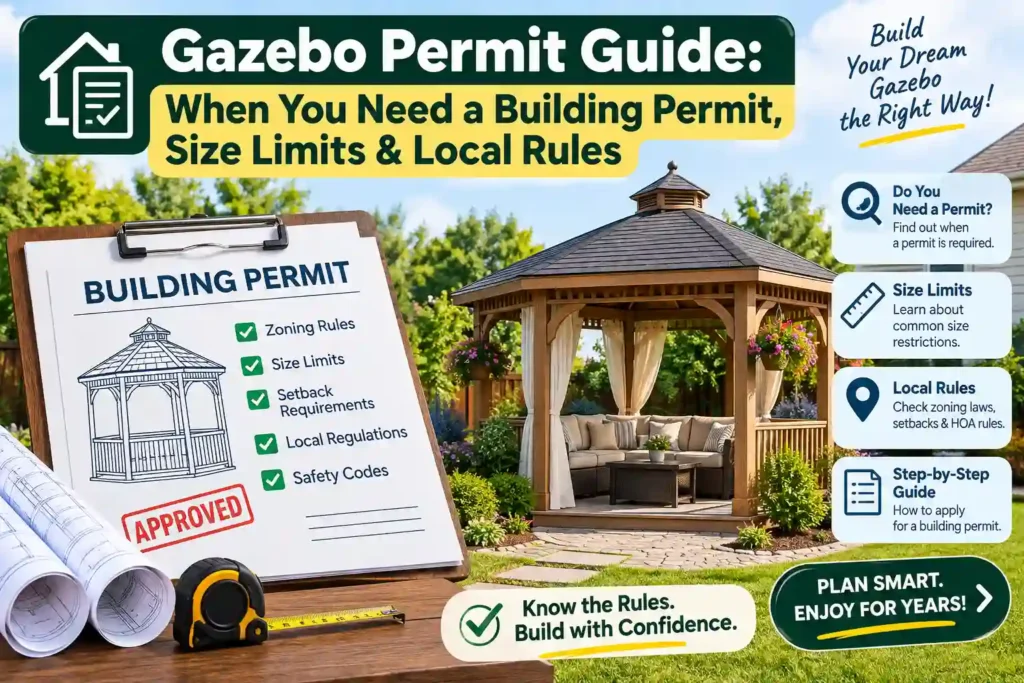
A gazebo looks like a simple backyard project but local rules make it more than that. You need to know if your gazebo needs a permit, what size you can build and where you can place it before you start to build it.
A permit is local approval that helps confirm your gazebo meets required building and safety rules. You also need to follow zoning rules or get HOA approval, depending on your project. It depends on several factors. The size, height, foundation, electrical work and location. They all can affect the requirements.
There is also no single permit rule for every homeowner. Requirements can vary by city, county, state and local zoning authority. A gazebo that needs no building permit in one area may need approval in another.
We genuinely contacted Sean Hennessy (gazebo builder) to get insights about permits. He shared about his experiences and when permits are important.
So this guide breaks down the main types of gazebo approval, size and height limits, setback rules, permit exemptions, costs and the steps to get approval. You will also learn what can happen if you build without a required permit and how NYC rules differ.
What is a Gazebo Permit and why do we need it?
A gazebo permit is official approval from your local authority before you build a gazebo. It shows that the planned structure follows local building and safety rules. Not every gazebo needs one. The need often depends on many factors. A permit helps you confirm that your project meets local requirements before construction starts.
A permit helps you follow local rules and avoid problems later. The main reasons you need one are to:
- Follow safety rules
- Meet local codes
- Check placement
- Avoid penalties
- Prevent future issues
Types of Gazebo Approval
Not every gazebo needs the same type of approval. The rules change based on its size, design and location of your property. Knowing which approvals to apply for helps you avoid delays, extra costs and problems during construction. It helps you to check the rules before you buy materials or start building.
1. Building Codes and Building Permits
Building codes explain how a gazebo can be built to meet local safety rules. A building permit is the approval you need before you start construction. It allows the local building office to review key parts of the project.
You need a building permit for a large, permanent, attached or complex gazebo. The type of foundation or structural design can also affect permit requirements.
Building codes cover many parts of a gazebo such as:
- Foundation and footings
- Posts, beams and framing
- Roof design and structure
- Structural connections
- Approved building materials
- Required safety features
- Electrical or plumbing work
The exact rules vary by location. Your local building department can confirm which requirements apply to your gazebo.
2. Zoning Laws and Zoning Approval
Zoning laws focus on where a gazebo is built on your property. The zoning law limits its location, size, height and distance from property lines. You need zoning approval when your gazebo is close to a property line or exceeds local limits. Rules can also apply to corner lots, easements and required yard space.
Zoning rules cover:
- Side and rear setbacks
- Maximum lot coverage
- Height limits
- Property line distances
- Easements
- Allowed locations on the lot
A gazebo can meet building codes but still fail to meet zoning rules. So checking both is important.
3. HOA Approval
HOA approval is a private rule for homeowners who live in an HOA community. It checks if your gazebo meets the community design and property rules. You need approval before building or installing the gazebo. Some HOAs also have stricter rules than local building or zoning laws.
Your HOA sets rules for:
- Gazebo size and height
- Roof style
- Building materials
- Colors and finishes
- Placement in the yard
- Screens or enclosures
- Overall appearance
An HOA approval does not replace a required building or zoning approval. You need both before starting the project.
4. Retroactive Gazebo Permit
A retroactive gazebo permit is used when a gazebo was built without a permit that local rules required. It gives the local building office a chance to review the structure after construction.
You need this approval if you later learn that the gazebo was not permitted. It can also become important during a home sale, property inspection or local code review. The local office asks for plans, drawings or an inspection before approving the existing structure.
The local authority asks for:
- Current measurements
- Site plans
- Construction details
- Structural drawings
- Permit fees
- Required inspections
If the gazebo does not meet current rules then you need to make changes before approval. Retroactive approval is not always available so contact your local building office before taking action.
Does Permit-Exempt Mean I Can Build Anywhere?
No. A gazebo that does not need a building permit must follow local zoning rules as per Sean Hennessy. You need to meet setback distances, height limits, lot coverage rules and easement restrictions. These rules limit where you place the gazebo on your property. Permit-exempt does not mean you can ignore the local rules. You should always check with your local zoning office before building even when your gazebo falls below the permit size limit.
When you need a permit
A gazebo needs a permit when its size, height, foundation or features exceed the local limits. Its location triggers zoning approval even when a building permit is not required. Electrical work, plumbing and permanent construction can add more requirements.
The rules depend on your local building and zoning authority. Here are the main factors that can determine whether you need approval.
Size
Size is one of the most common factors used to determine permit requirements. A building permit may not be required for smaller accessory structures that stay within local size limits.
For example, San José does not require a building permit for certain accessory structures up to 120 square feet unless they include electricity or plumbing. Structures over 120 square feet require a building permit there.
The permit type for size is a building permit. But zoning rules can control the gazebo size, site coverage and placement.
Do I need a building permit to install a 10×12 gazebo kit in my backyard?
A 10×12 gazebo covers 120 square feet which fall within some local permit exemptions. You follow local setback and property line rules even when no building permit is needed. Check your city rules first as some areas require permits for hardtop or anchored gazebos.
Height
Height rules vary by local building and zoning codes. There is no single height limit that requires a gazebo permit across the United States. Some cities set a maximum height for accessory structures while others use different limits based on the structure and property.
For example, San José lists a 12 foot maximum height for certain accessory structures. A gazebo that exceeds a local height limit needs zoning review or other approval.
The exact permit type depends on the local rule.
Foundation
The type of base can affect your gazebo permit needs. A fixed base faces more rules than a gazebo that can be moved. Concrete footings and fixed posts need a closer code check.
A building permit is needed when the base is part of the main structure. Local rules also set limits on where you can place the base. Check with your local building office before you pour concrete or set fixed footings. This can help you avoid costly work later.
Electrical Work
Adding power can change the permit rules for a gazebo. This can apply even when the gazebo is small. Lights, outlets, switches, fans and wires need an electrical permit. An inspection may also be needed.
Some cities base the permit on the type of work. They may not base it on the size of the gazebo. Check with your local building office before you add power. This helps you avoid a fine, delay or costly fix.
Temporary Gazebo
Temporary gazebos face fewer permit rules than permanent structures but they are not always exempt. Local codes set the limits on how long the gazebo stay, where you can place it and how it can be secured. Rules also cover its size and intended use. Check your local zoning office before keeping a temporary gazebo on your property for a long time.
Permanent Gazebo
A permanent gazebo needs a building permit or other local approval. This is more common when it has a fixed foundation, a large footprint, electrical wiring or permanent utility lines. These features bring the gazebo under more building rules.
Zoning rules also control the gazebo size, height and location. If your home is in an HOA community then you need approval from the association before you build. By checking these rules early helps you avoid delays and extra costs.
If my gazebo is under the permit size limit, do I still have to follow zoning rules?
Yes. A gazebo can be exempt from a building permit and still must meet local zoning rules. You need to follow setbacks from property lines, utility easements and your home. Ignoring these rules led to citations even when no building permit was required.
How far must a gazebo be set back from neighboring property lines?
There is no single setback distance for gazebos across the US. Local zoning rules require 3 to 10 feet from side or rear property lines but some areas require more. Corner lots and properties near easements have different setbacks. Check your local zoning rules and measure from the point required by your local code which includes the roof overhang.
When You Don’t Need a Permit
A gazebo does not need a building permit when it meets your local exemption rules. Size, height, design, foundation and other features affect whether an exemption applies.
- Small size: Some local codes exempt detached structures under 120 to 200 sq. ft. from a building permit. The exact size limit depends on your city or county.
- Low height: Some areas allow a small gazebo 10 to 12 feet without a building permit. The height is usually measured from the ground to the highest roof point.
- Freestanding design: A gazebo that stands separately from your home qualifies for an exemption. Attached structures follow different building rules.
- Open-air structure: A gazebo with open sides has fewer permit requirements. Adding full walls can change how the local code treats the structure.
- No permanent foundation: Portable or pop-up gazebos qualify when they are not permanently fixed to the ground. A concrete foundation or permanent anchors can bring extra permit rules.
- No utilities: A gazebo without electrical wiring, plumbing, gas lines or built in systems has fewer permit requirements. Adding utilities can require separate permits or inspections.
Sean Hennessy described that these are common exemption conditions not national rules. Always check your local building codes, zoning rules and permit requirements before you build.
How to obtain a gazebo permit
Getting a gazebo permit is easier when you know what your local office needs. Follow these steps before you start building.
- Check Local Permit Limits: Contact your city or county building department before buying materials. Ask if your gazebo needs a permit based on its size, height, foundation and planned features.
- Prepare a Site Plan: Draw a simple plan that shows your home, property lines and gazebo location. Add the gazebo size, distance from boundaries and nearby structures.
- Submit Your Application: Complete the permit form through your local building department. Some cities accept online applications while others require you to apply in person.
- Pay Fees and Wait for Approval: Pay the required permit fee when you submit your application. Wait for approval before you start construction or install the gazebo.
- Complete Required Inspections: Schedule the inspections required by your local building office. Keep structural and electrical work open until the inspector has checked it.
What Happens After You Submit a Gazebo Permit Application?
The local building office reviews your plans and project details after you submit your gazebo permit application. The process vary by location but you will usually move through these steps:
- Plan review: The officials will check your gazebo plans against local building codes and safety standards.
- Zoning review: The location is checked for setbacks, height limits, site coverage and other zoning rules.
- Corrections: If something does not meet local rules then you need to update your plans and resubmit them.
- Permit approval: Once your plans meet the requirements then the local office issues the permit.
- Construction: Start building only after receiving the required approval.
- Inspections: An inspector checks the foundation, framing, electrical work or other stages of construction.
- Final approval: The project can receive its final sign-off after all required inspections pass.
Do not start construction while your application is under review. Starting work before approval can lead to penalties or require changes to the gazebo.
How Much Does a Gazebo Permit Cost?
A gazebo permit can cost around $140 to $3,000 depending on the project and local rules.
Permits for similar outdoor projects can fall within different price ranges.
| Project type | Typical permit cost |
| Gazebo or pergola | $50–$150 |
| Deck | $50–$600 |
| Roof replacement | $400–$1,500 |
| Electrical work | $40–$500 |
| Plumbing work | $30–$500 |
The permit price can change based on your city and gazebo size. Your local authority charges a flat fee or base the cost on project value, square footage or construction type.
What Is the Process and Typical Cost to Apply for a Retroactive Gazebo Permit?
A retroactive permit is used when a gazebo was built without a permit. The process often starts with submitting a site plan, gazebo details and manufacturer specifications for review.
- You need to submit drawings, site plans and construction details.
- The local office requires an inspection of the existing gazebo.
- Inspectors ask you to expose footings or anchors to check the structure.
- Additional fees or penalties apply for unpermitted work.
- Costs vary by location so there is no fixed national retroactive permit fee.
- Some areas charge higher fees than a standard permit.
Do I Need a Permit for a DIY Gazebo or for Gazebo Kits?
A DIY gazebo and a ready-to-assemble gazebo kit follow the same local permit rules as other gazebos. Building it yourself or buying a kit does not make it permit-free. If the gazebo meets your local exemption rules for size, height, foundation and placement then you do not need a building permit. Sean Hennessy added that a larger or permanent gazebo requires approval even when you install it yourself.
Check your local building department before installing a DIY gazebo or kit. Give them the kit dimensions, foundation type, height and planned location to get a clear answer.
Do I Need a Permit for a Pergola?
A pergola needs a permit but the rules depend on your local building and zoning codes. Small, open structures may qualify for a permit exemption when they meet local size and height limits.
Check with your local building and zoning office before construction. Pergola rules can differ from gazebo rules so do not assume the same exemption applies to both.
What are the consequences of building a Gazebo Without a Required Permit?
Building a gazebo without a required permit can cause fines, delays and added costs. Local officials ask you to fix the structure or get approval after construction.
- Fines or higher permit fees
- Stop-work orders
- Retroactive permit requirements
- Required structural changes
- Mandatory building inspections
- Delays when selling the property
- Possible insurance claim issues
Will an unpermitted gazebo cause issues when selling my home or filing insurance claims?
An unpermitted gazebo can delay a home sale if an inspection finds it. Your insurer also reviews claims linked to unapproved construction. Local laws may require you to disclose the gazebo when selling your home.
Do I Need a Permit for a Gazebo in NYC?
Yes, most gazebo construction in NYC should be checked with the Department of Buildings (DOB) before work begins. NYC requires permits for most construction. A gazebo also needs zoning review for its location, height and placement on the lot.
Because NYC rules depend on the property and project details, do not rely on a general size exemption. Check with the NYC Department of Buildings and confirm the zoning rules before installing the gazebo.
Conclusion
A gazebo does not always need a building permit but you should never assume it is exempt. Size, height, foundation, location, electrical work and construction type can all affect the rules.
Start by checking your local building code and zoning requirements. If you live in an HOA community, review its rules as well. A permit exemption does not remove zoning or setback requirements.
Before buying a gazebo kit or starting construction, contact your local building department. A quick check can help you avoid fines, costly changes and problems when you sell your home.
FAQs
Does a gazebo attached to my house need a permit?
An attached gazebo needs a permit because local codes can treat it as part of the home. Check with your local building office before you start the work.
Where can I check my gazebo permit requirements?
Contact your local building department and zoning office. They can tell you which rules apply to your property and gazebo.
Is a permit required for a gazebo without walls?
An open gazebo qualifies for a permit exemption in some areas. Local rules decide if a permit is needed based on its size, height and design.