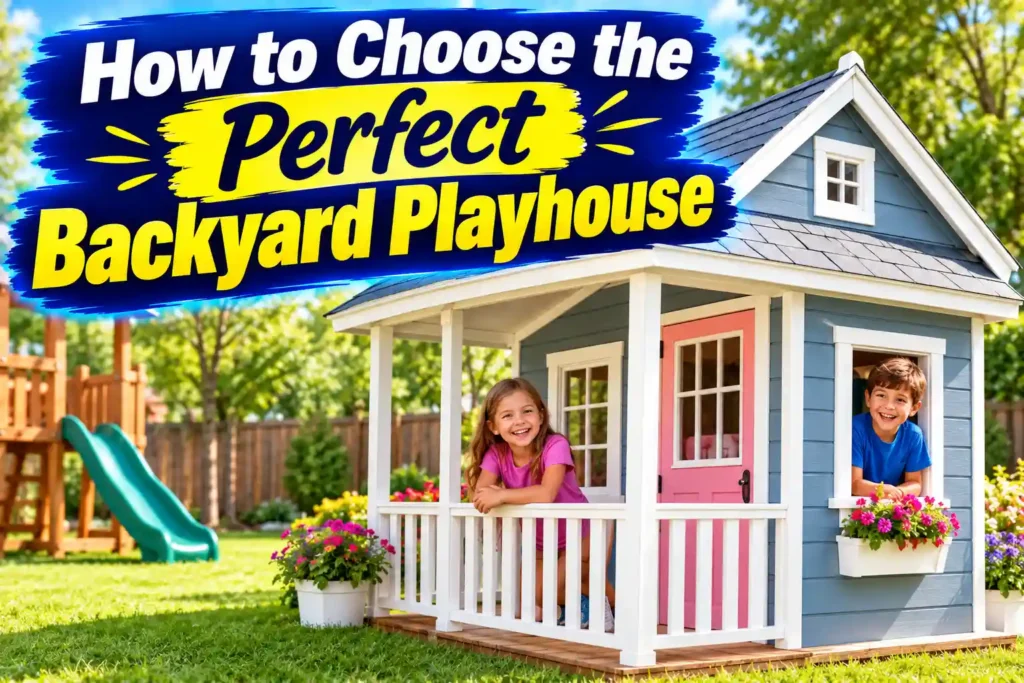
Choosing the perfect backyard playhouse is much more than picking a design that looks good in a catalogue. The right playhouse should fit your available space, suit your child’s age, provide years of use and also withstand weather conditions. It can be difficult to know which option offers the best value for your family with so many styles, materials, sizes and features available.
Making the wrong choice can lead to maintenance headaches and waste of money. So that’s why it’s important to evaluate several factors before making a purchase. We have compiled this guide of GazeboInsider to help understand everything before buying a backyard playhouse.
You will learn how to choose the right size, material, location and foundation. We’ll also cover common concerns about durability, permits, pests, weather protection and features. Apart from this, we will also help you choose the right playhouse so it does not feel like waste when your child outgrows it.
Our team has dug deep into forums to find your concerns. Then we contacted a builder Sean Hennessy (SacramentoShamrock) to get real and practical solutions. So read this quick guide to get a backyard playhouse that your children will fall for.
5 Factors to Consider Before Choosing Playhouse
Here are a few things that you need to check before buying a playhouse in 2026. These include everything from place to material and the playhouse itself.
1. Space and Placement
Evaluate the available space and decide where structure will be placed.
- Measure the Available Area: Start by measuring the intended installation area. Make sure to leave enough open space around the structure so children can move freely and play safely. This extra clearance is especially important if the playhouse includes features such as slides, climbing walls or swings. You should also think about future landscaping plans. If you plan to add a patio, garden, fire pit or other backyard features later. So make sure the playhouse placement won’t limit your options.
- Choose the Right Location: Placement is just as important as size. Select a flat level area that can properly support the playhouse and reduce long term wear on structure. A level foundation prevents shifting, uneven floors and alignment issues with doors and windows. Make sure the playhouse remains visible from the kitchen or living room so you can supervise while children are playing.
- Keep Safety in Mind: Avoid placing the playhouse too close to fences, large trees, pools, ponds, retaining walls or other backyard hazards. You have to maintain a safe zone as it reduces risk of accidents and provides children with enough room to play comfortably.
Where Is the Best Place to Position a Playhouse?
Place the playhouse on a flat well drained area that stays visible from your home for easy supervision. A semi shaded location keeps the interior cooler. While avoiding low spots prevents water from pooling around the structure.
Does a Backyard Playhouse Require a Building Permit or HOA Approval?
Most ground-level playhouses under 100 square feet do not require a building permit but local rules vary. If you live in an HOA community then review its guidelines first. Because restrictions on size, height, and placement are common.
2. Right Playhouse Material
The material of a playhouse affects its durability, maintenance requirements and overall lifespan. Here are some ideas for playhouse material for your backyard:
- Wood: Wooden playhouses are popular because they blend naturally into most backyard and give traditional look. Plus, they can also be painted, stained or customized with additional features as your child grows.. However, wood requires regular maintenance to protect it from moisture, insects and sun damage. Cedar and pressure treated wood are often preferred because they provide better durability outdoors.
- Plastic: Plastic playhouses are lightweight, easy to assemble and require very little maintenance. They are especially popular for toddlers as they have rounded edges, simple designs and durable surfaces. The main drawback is that plastic may fade after years of direct sunlight exposure.
- Metal: Metal playhouses are known for their strength and weather resistance. They can withstand harsh conditions and generally require less upkeep than wood. However, metal structures may become hot in direct sunlight and often provide a less inviting play environment for children. They also offer fewer design options compared to wooden playhouses.
Which Material Is Best?
There is no single best material for every family. Plastic is often the most practical choice for toddlers and low-maintenance households. While wood offers better aesthetics, customization and long term appeal. Metal can work well in certain climates but is less common for children’s playhouses due to comfort and design limitations.
How Can You Cool Down a Playhouse During the Summer?
Playhouses can become extremely hot in direct sunlight, especially plastic models and unshaded wooden. So choose a playhouse with good cross ventilation including windows on opposite sides that allow air to flow through.
You can also install a battery powered or solar powered fan to remove trapped hot air. If possible then opt for light colored roof or repaint a dark roof with a reflective colour to reduce heat absorption.
3. Child’s Age and Needs
The best backyard playhouse is one that matches your child’s age, abilities and interests. A design that’s too basic may be outgrown quickly. While one that’s too advanced can create safety concerns. So here are playhouses you should opt for different age groups:
- Toddlers (Ages 1–4): Simple ground-level playhouses with low entry points and open visibility are usually best for toddlers. Look for rounded edges, wide doorways and sturdy construction to minimize bumps and falls. Plastic playhouses are often a popular choice because they require little maintenance and have fewer hard surfaces.
- Young Children (Ages 4–7): Children enjoy larger playhouses with porches, low platforms, slides and role playing features as they grow. Play kitchens, chalkboards, mailboxes and interactive accessories keep the space engaging.
- Older Children (Ages 7–12): Older kids typically prefer structures that feel more like their own private space. Multi-level playhouses, raised platforms, climbing features and larger interiors are actually best at this point. Features such as benches, chalkboard walls and customizable spaces can also help the playhouse remain useful as children grow.
- Consider an All-in-One Solution: If you have children of different ages or want a playhouse that offers long term value. Then consider a modular or all in one design. Models with add-on slides, swings, climbing walls or activity decks adapt to changing interests and may stay relevant much longer than a basic standalone playhouse.
Is a Raised Platform Playhouse Safe for a 3-Year-Old or Should You Stick to Ground-Level?
A ground level playhouse is a safer choice for most 3 year-olds. It allows toddlers to enter and exit independently without climbing stairs or using other platforms so less risk of falls. While raised playhouses with slides may look more exciting but they are generally better suited for children aged 5 and older..
4. Safety Features to Look for
Look for playhouses with rounded edges and smooth surfaces around doors, windows, railings and other high contact areas. These rounded corners prevent bumps, cuts, and scrapes during active play.
Materials should also be child safe. Choose models with non toxic, lead free paints and look for BPA free and phthalate free plastics when purchasing a plastic playhouse. In addition, pay close attention to the hardware as well. Screws, bolts and hinges should be recessed or covered with protective caps rather than protruding from structure.
Quick Safety Checklist
If you don’t have time to see and check if features and everything is safe then you can simply check these certifications for playhouses:
- ASTM F1487 compliance: This means the playhouse follows strict rules for structural safety, spacing, fall zones and overall design.
- CPSIA compliance: The product is free from harmful levels of lead and other toxic substances. So it’s safe for children to touch and use daily.
- IPEMA certified playhouses: A third-party verification that confirms the playhouse meets recognized safety and performance standards.
- CPSIA / REACH Compliance: Ensures plastic materials do not contain harmful chemicals commonly found in lower quality products.
- Surfacing certification (ASTM F1292): This confirms that the ground material under slides or elevated platforms reduce injury risk by cushioning falls
5. Features to Look For So Kids Don’t Outgrow The Playhouse
Height and flexibility are one of the important factors to make sure a playhouse grows with your child instead of being outgrown. Avoid small toddler style designs with low 4 foot ceilings and instead choose structures with at least 5 to 6 foot interior peaks. This extra space makes the playhouse comfortable for both younger kids and older children.
It’s also better to avoid overly themed or fixed designs such as molded kitchens or character based setups. Since these are often outgrown quickly. Instead opt for simple blank canvas layouts with features like benches, chalkboard walls or open interiors. They can easily be changed into a clubhouse, reading nook or creative play space as children grow.
Apart from this focus on upgradability. Choose a base structure that supports add-ons like slides, climbing walls or swing attachments. So the playhouse can evolve over time instead of being replaced. The features such as interchangeable slides, detachable swings or repositionable railings looks exciting.
That being said, neutral designs like cottages, cabins or simple A-frames work best for long-term use. They can be restyled with paint, décor or accessories as interests change. A slightly larger structure is also a smart choice. As it allows younger children to grow into the space rather than outgrowing it quickly.
What are the best interior accessories for a wooden playhouse?
Here are few accessories for wooden playhouses to design them:
- A chalkboard wall for drawing
- Working bell or buzzer for role play games
- Toy steering wheel for imaginative driving
- Battery powered puck lights or solar string lights for evening play
- If the playhouse is raised then add simple pulley and bucket system
How can you make a plastic playhouse look modern and expensive?
Clean the surface thoroughly and lightly sand it so the paint sticks better when giving a premium look to plastic playhouses. Then use a plastic bonding spray paint like Krylon Fusion or Rust Oleum Painter’s Touch to change the base colour. The white, grey or black works best for a modern look. You can also upgrade the style with black trim detailing, small stick on LED lights and mini flower boxes.
6. Budget and DIY Building
It’s important to understand how prices vary based on material, size and build type. Basic plastic playhouses usually range from $200 to $800. Mid range wooden kits typically cost between $800 and $3,000. While larger wooden structures with features like lofts, porches or slides can range from $3,000 to $10,000 or more. Plus, custom built playhouses offer most flexibility costing around $3,500 and going up to $100,000 depending on design, materials and labor.
DIY kits vs. pre-built vs. custom-built:
Your choice between DIY kits, pre built and custom built options also impacts the budget. DIY kits are the most cost effective and often arrive pre-cut or pre-drilled for easier assembly. Whereas pre-built units cost more but save significant time and effort. However, custom built playhouses offer full design control but come with higher labor costs especially when professional builders charge hourly rates.
Are Cheap Playhouse Kits Worth Buying?
They can be worth it for short-term use or younger kids but lower cost kits often use thinner materials that may need reinforcement. Adding better screws, weatherproof paint and a solid base significantly improves durability.
What’s the best base for a Wooden Playhouse Among Wood Chips, Pea Gravel and Grass?
Wood chips (especially wood fiber or playground mulch) are the best option for a heavy wooden playhouse. They provide good drainage, reduce mud buildup and offer a softer surface for kids in case of falls.
Grass is not ideal because it dies under the structure and quickly turns into a muddy uneven patch. Pea gravel also performs poorly as it sifts easily, spreads into the lawn and leaves an unstable surface.
How Can I Anchor a Raised Playhouse Without Permanent Concrete Posts?
Use concrete deck blocks or heavy duty ground spikes on gravel bases for a stable but removable foundation. You can also install screw-in ground anchors at each corner for more stability. Then attach the structure using turnbuckles or straps connected to the corner posts. This setup keeps the playhouse stable in wind and active play.
Best Paint and Sealant for Wooden Playhouses
Use exterior 100% acrylic latex paint for strong weather protection and durability. You can go for UV-resistant and water-repellent exterior stains for wooden outdoor structures.
How to Prevent Spiders, Wasps and Critters?
Seal gaps and cracks with exterior caulk and keep windows screened with fine mesh. Avoid leaving food, fabric cushions or clutter inside. Then use natural deterrents like peppermint oil spray around entry points.
What are the Hidden Safety Hazards of Backyard Playhouses that People Overlook?
Here are some overlooked design issues that need attention to prevent risk of injuries in children:
- Head entrapment gaps: Spaces between railings, ladders or openings should be either very small or large enough to avoid trapping a child’s head. Incorrect spacing is a common but hidden hazard.
- Protruding hardware: Exposed screws, bolts or metal fittings can catch clothing or hoods during movement. This may lead to pulling injuries or entanglement. All hardware should be flush, recessed or covered for safety.
- Door hinge injuries: Heavy or fast closing doors can easily pinch small fingers. So go for safe spacing and slow close designs to prevent these accidents.
Conclusion
A backyard playhouse is all about balancing space, safety, durability and long term use. You have to pay attention from selecting the right location in your yard to choosing materials and playhouses. Safety should always remain a priority.
So make sure the playhouses comply with certification, have smooth edges and stable construction. Remember your child’s age, growth and changing interests while making purchases so the playhouse doesn’t get outgrown too quickly.
Features like flexible layouts, add-on compatibility and simple designs can improve long term value. Budget choices also vary widely depending on the method you opt for building. It can be a custom build or pre-built kit so prices are also different.
FAQs
How long does a backyard playhouse last?
A well-built wooden playhouse can last 8–15 years with proper maintenance. While plastic ones can last longer with minimal upkeep.
Do I need planning permission for a playhouse?
Most small ground level playhouses don’t need permission but HOAs and local rules may still apply.
What is the safest age for a raised playhouse?
Raised playhouses are generally better suited for children aged 5 and above due to fall risks.
How often should I maintain a wooden playhouse?
Wooden playhouses should be resealed or repainted every 1–2 years to protect against weather damage.