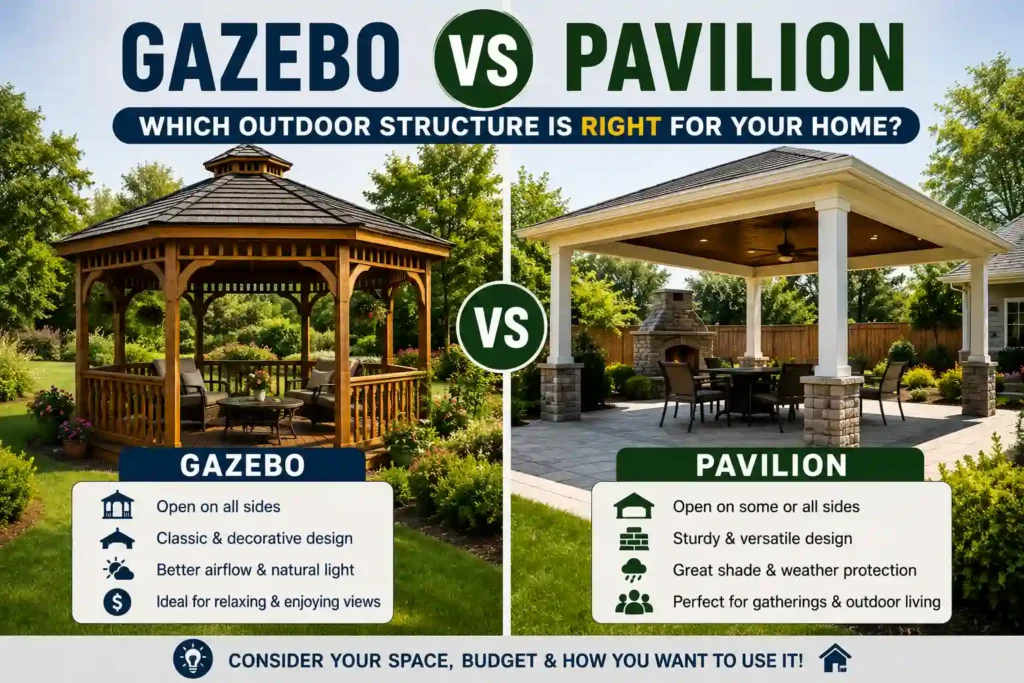
Gazebo and Pavilion both structures are great but the right choice depends on how you plan to use your outdoor space. They both provide shade and an inviting place to relax but differ in size, layout, privacy, cost and functionality.
A gazebo can be a cozy garden retreat while a pavilion is often a better option for outdoor kitchens, family gatherings and entertaining guests. Homeowners usually inquire which structure offers better value, handles harsh weather more effectively or requires fewer permits. And that’s why I have compiled the whole information in this guide.
We will talk about the factors that you should consider before choosing one of them, Plus, we will also dig deep into design, cost, durability, maintenance, installation and resale value. We have also gathered the queries you often ask over forums and left with just opinions so take your cup of coffee and lets get started.
Which Structure Fits Your Backyard Best?
As mentioned earlier, it depends on your preferences. So here is a quick comparison which may help you to see how they actually differ.
| Feature | Gazebo | Pavilion |
| Primary Purpose | Private relaxation and garden retreat | Outdoor entertaining and living |
| Overall Design | Partially enclosed | Completely open-sided |
| Typical Shape | Octagonal, hexagonal, round, square | Mostly rectangular or square |
| Roof Style | Decorative pitched roof | Large open-span roof |
| Available Space | Best for small to medium gatherings | Suitable for large gatherings |
| Privacy | Higher due to partial enclosure | More open and exposed |
| Airflow | Moderate | Excellent natural ventilation |
| Outdoor Kitchen Friendly | Limited | Excellent |
| Poolside Use | Good | Excellent |
| Insect Protection | Easier to add screens | Usually requires curtains or retractable screens |
| Typical Cost | Lower overall investment | Higher due to larger size |
| Maintenance | Moderate | It depends on the material, but generally, it is similar |
| Future Expansion | Limited | Easier to expand and customize |
| Best Backyard Size | Small to medium | Medium to large |
| Overall Best For | Quiet retreats and decorative landscapes | Outdoor living, entertaining, and multi-purpose spaces |
What Is a Ramada?
Ramada is essentially a type of pavilion. The term is commonly used in the American Southwest to describe an open sided structure with a solid roof. While the design is the same as a pavilion, Ramada often features regional architectural elements such as heavy timber beams, stone columns or clay tile roofing.
How to Decide Between a Gazebo and a Pavilion?
Now that you understand what sets these two outdoor structures apart, it’s time to answer the question that matters most.
The right choice depends on how the space will be used for years to come. Your backyard size, the way you spend time outdoors, your budget and even your local climate can all influence which structure gives you the best long-term value.
Instead of looking at gazebos and pavilions separately, compare them side by side across the factors that homeowners consider before investing.
Evaluate Your Backyard Size & Space
Space is one of the first things you should evaluate. A design that catches your attention online doesn’t always fit the layout, scale or everyday use of your own backyard. A gazebo works best in small to medium sized backyards because it provides a dedicated outdoor space. It naturally becomes a focal point while leaving enough room for gardens, lawns or children’s play areas.
A pavilion is usually designed for larger spaces. Its open layout makes it ideal for homeowners who want to complete an outdoor living area with plenty of room to move around.
Choose a gazebo if you:
- Have a compact or medium-sized backyard.
- Want to preserve open lawn space.
- Prefer a structure that blends into landscaping.
- Need a quiet seating area rather than a large gathering space.
Choose a Pavilion If You:
- Have a spacious backyard.
- Want to cover an existing patio.
- Plan to create an outdoor entertainment zone.
- Expect to add more outdoor features in the future.
Can I Still Fit a Pavilion if I Have a Small Backyard?
Yes, you can but it may not be the best choice. Pavilions need enough open space around them to look balanced. So if your backyard is small then it may make it feel crowded. An 8×8 or 10×10 gazebo is often a better fit in such cases.
Match Your Outdoor Structure
This is where many homeowners realize one option clearly fits their lifestyle better than the other. If your goal is to enjoy peaceful mornings with a cup of coffee or read a book then gazebo fits. A pavilion serves a different purpose. It functions more like an outdoor extension of your home.
A Gazebo is better for:
- Quiet relaxation
- Reading
- Morning coffee
- Garden seating
- Hot tubs
- Romantic outdoor spaces
A Pavilion is better for:
- Outdoor dining
- Family gatherings
- Weekend barbecues
- Outdoor kitchens
- Poolside entertaining
- Watching sports outdoors
Which Structure Looks Better Next to a Swimming Pool?
A pavilion is generally a better option for pool areas. Its open layout complements modern pool designs and provides plenty of shaded space for lounge chairs. It also maintains clear views of the pool and makes the area appear bigger.
Which Offers Better Value
Price is often one of the biggest deciding factors but the lowest upfront cost doesn’t always provide the best long term value.
Gazebos are typically more affordable because they are smaller and require fewer materials. If you’re working with a limited budget then they may save you from major investment. Whereas Pavilions cost more because of their larger size and structural requirements.
However, that additional investment often brings greater versatility. A pavilion can replace the need for separate covered dining areas, outdoor kitchen or entertainment spaces.
Make sure to include expenses beyond the structure itself such as:
- Foundation or concrete work
- Roofing upgrades
- Lighting and electrical installation
- Ceiling fans
- Outdoor furniture
- Landscaping
- Permit fees
- Professional installation
Does A Gazebo Or Pavilion Increase My Homeowner’s Insurance Premium?
Yes, it can but usually only by a small amount. The slight increase simply covers the added value of your property. However, adding high risk features like an outdoor kitchen, a brick fireplace or electrical wiring will impact your premium rates more significantly.
Which Structure is Easier to Maintain
Every outdoor structure requires some level of maintenance but the amount of work depends largely on the materials you choose. Wooden gazebos and pavilions offer timeless beauty but need regular care. Cleaning, staining, sealing and occasional repairs protect wood from moisture, insects and sun exposure.
Vinyl and aluminum structures require much less maintenance. A simple wash every few months is often enough to keep them looking their best. So its good option for homeowners who prefer minimal upkeep.
Which Option Is Better for Bug Control in the Summer?
A gazebo is the better choice for keeping bugs out. Its smaller size and structured frame make it easy to install mesh screens, curtains or screened gazebo kit. While you can add screens to a pavilion but doing so is usually more expensive due to its larger and open design. However, if you can afford then what’s better than that?
Seasonal Maintenance Checklist
Before winter arrives here are few things that you may have to do:
- Remove leaves and debris from the roof.
- Check gutters if they’re installed.
- Store cushions and fabric accessories indoors.
- Inspect anchors after severe storms.
- Trim nearby tree branches that could damage the roof.
A well maintained gazebo or pavilion can remain attractive and functional for decades.
Choose Based On Your Local Climate
A structure that performs well in one part of the country may require additional maintenance or even a different design in another. So instead of choosing based only on appearance consider weather requirements also. Here are preferences:
- Northeast: A structure that can support more roof weight is necessary when there is a lot of snowfall. For bigger areas a pavilion with a sturdy roof system is a good option. But a well constructed gazebo is also effective for smaller backyards.
- Southeast: Termites, rain and humidity can all reduce an outdoor structure’s lifespan. Aluminium, pressure treated wood and cedar are all dependable choices. Appropriate anchoring is crucial if hurricanes are frequent in your region.
- The Midwest: In the Midwest, weather fluctuations are common. So focus on solid foundation and high quality construction to make sure your building can withstand wind, rain and snow all year round.
- The Southwest: Intense sunlight can cause materials to fade and overheat. UV resistant materials and durable roofs will help keep your outdoor space cooler and reduce long term wear.
- Pacific Coast: Frequent moisture makes rot resistance a priority. So cedar, aluminum and metal roofing generally hold up well and require less maintenance in wet conditions.
Do I Really Need Permit For Freestanding Gazebo or Pavilion?
Yes, you may need permits in most cases but it depends on the size, location and whether the structure is permanent or temporary. Generally, pavilions are more likely to require building permits because they are permanently anchored to concrete footings.
On the other hand, small gazebos may not require a permit if they fall within allowed size range and aren’t permanently attached to the ground. However, larger gazebos or those installed on permanent foundations may still need approval.
What Happens If I Run Electricity To My Pavilion Without a Permit?
Doing unpermitted electrical work is highly risky. It creates serious fire and shock hazards. Your insurance provider can legally deny your damage claims. Plus, home inspectors will flag it and may force you to remove it when you sell your home.
Can my HOA legally force me to tear down a newly built outdoor structure?
Yes, they absolutely can. Building without prior written approval violates your neighborhood contract. The HOA can fine you daily, place a lien on your home or force you to dismantle the structure.
What Is The Standard Setback Distance For Building An Outdoor Structure?
It varies by neighborhood but standard rules require a specific distance from property lines. Typically, you must keep your pavilion or gazebo 3 to 10 feet away from fences, property boundaries, or your main house.
How Should You Install Your New Outdoor Structure
Once you choose between a gazebo and a pavilion then you need to decide on installation. The right path depends heavily on how complex the structure is. You also need to look at your budget, tools and available time. Generally, you have three main choices:
- DIY Installation
- Prefabricated Kits
- Professional Builders
Is DIY Installation Really Worth The Effort?
Building it yourself saves a lot of money on labor. It is a great option if you have basic construction skills and proper tools. You get to work on your own schedule.
Plus, finishing a project brings great personal satisfaction. However, don’t forget that mistakes get expensive quickly. The process takes a lot of time and heavy lifting means you cannot do it alone.
Why Do Homeowners Love Prefabricated Kits?
Prefab kits offer a sweet spot between price and convenience. They cost much less than a fully custom design. The package arrives at your door with pre-cut wood or metal.
It includes all necessary hardware and step-by-step instructions. This setup shortens your build time significantly. It also prevents frustrating measurement mistakes.
When Should You Skip DIY And Hire a Professional?
Some projects are just too big for a weekend hobby. Large pavilions or custom timber structures need experienced hands. You should also hire a pro if you want to add electricity or plumbing.
A licensed contractor ensures the structure is safe and stable. They make sure everything follows local building codes. It costs more but it saves you from massive headaches.
Conclusion
Choosing between gazebo and pavilion isn’t about deciding which structure is universally better. It’s about selecting the one that works best for the way you live. A gazebo is small and best if privacy is your top concern and at the same time the pavilion is good for gatherings as they are open and large.
Likewise, they both differ in their pricing and structures. The larger the pavilion the more it costs you and it also depends on the material and the type of manufacturing you opt. So consider how you’ll use the space five or even ten years from now before making your final decision.
FAQs
What is the actual structural difference between a gazebo and a pavilion?
The main difference is their shape and foundation. A gazebo is usually octagonal, hexagonal or round with railings and raised to the floor. The pavilion is typically square or rectangular with open sides and is built directly on the patio, concrete slab or ground.
Which lasts longer?
Longevity depends more on the quality of materials, construction and maintenance than on the structure itself. A professionally built gazebo or pavilion made from durable materials such as cedar, steel or aluminum can last for several decades with proper care.
Which structure handles heavy winter snow loads better?
Both hardtop structures can handle snow but pavilions generally perform better because their simpler roof designs shed snow more efficiently.
Are gazebos more private than pavilions?
Yes. Gazebos offer more privacy due to their smaller size, railings and the ability to add curtains or screens.